What Food Is El Nido Famous For?
El Nido's best meals are simple: fish caught that morning, grilled over coals, eaten with rice and a view of the water. Here is what to order and where.
For a meal built into an outing, compare Tour A’s boat lunch with the adult Nacpan land day. Compare Your El Nido Options Below.
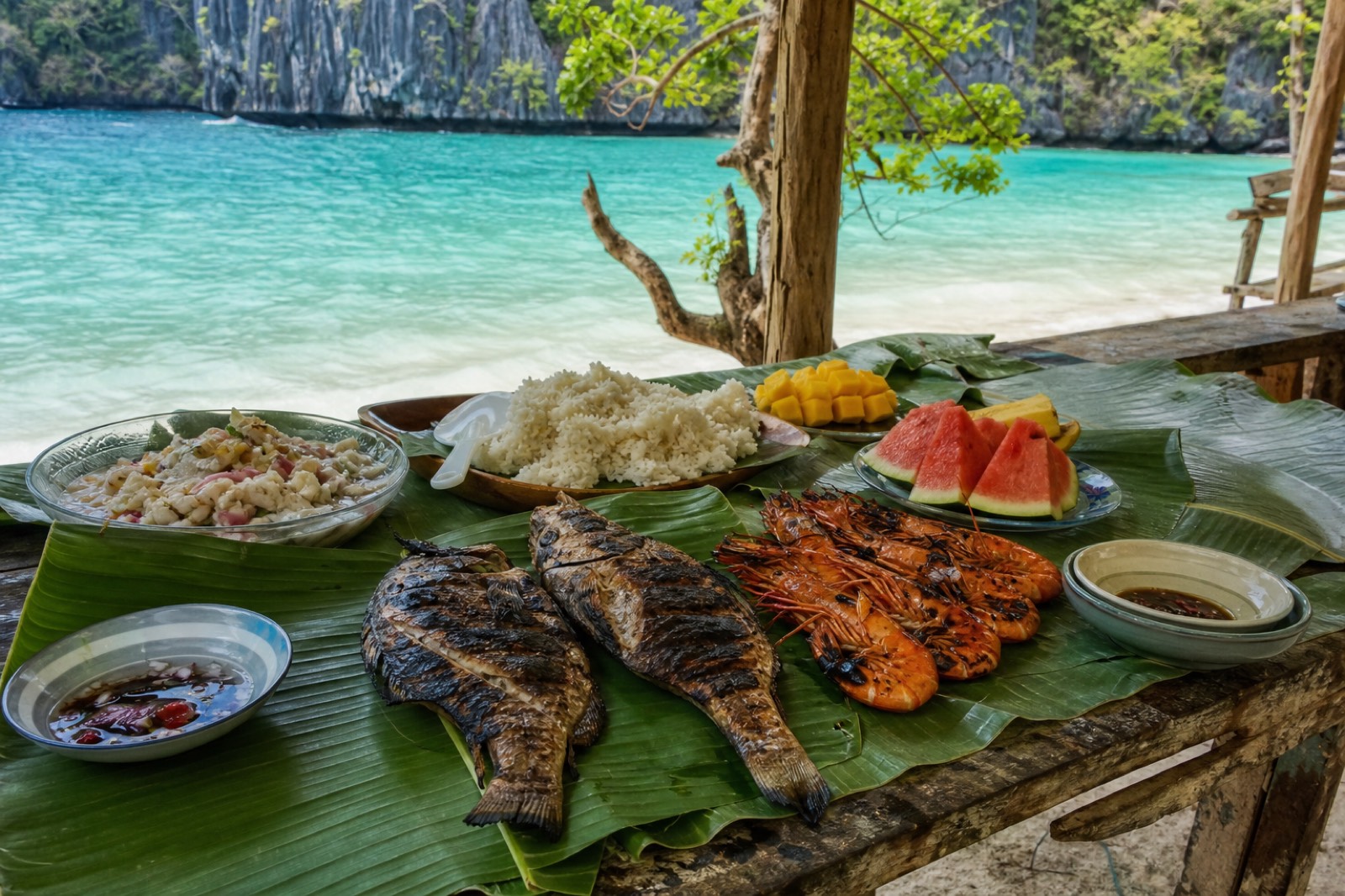
The food here follows the boats. El Nido is a fishing town on Bacuit Bay, so the seafood is about as fresh as it gets, and the cooking stays close to the source. Do not come expecting fine dining. Come for grilled fish on a beach, a cold drink, and the kind of meal that tastes better because you earned it out on the water.
- Try grilled seafood and Filipino dishes independently in town.
- Tour A includes lunch as part of a boat day; confirm gear and dietary requests separately.
- The Nacpan land outing offers a different included lunch for adults.
What Food Is El Nido Famous For?
El Nido is famous for fresh grilled seafood, the beach buffet lunch served on island-hopping tours, and honest Filipino home cooking like kinilaw, adobo, and sinigang. Tropical fruit is everywhere, and the compact town has a lively strip of restaurants and beach bars serving all of it a few steps from the sand.
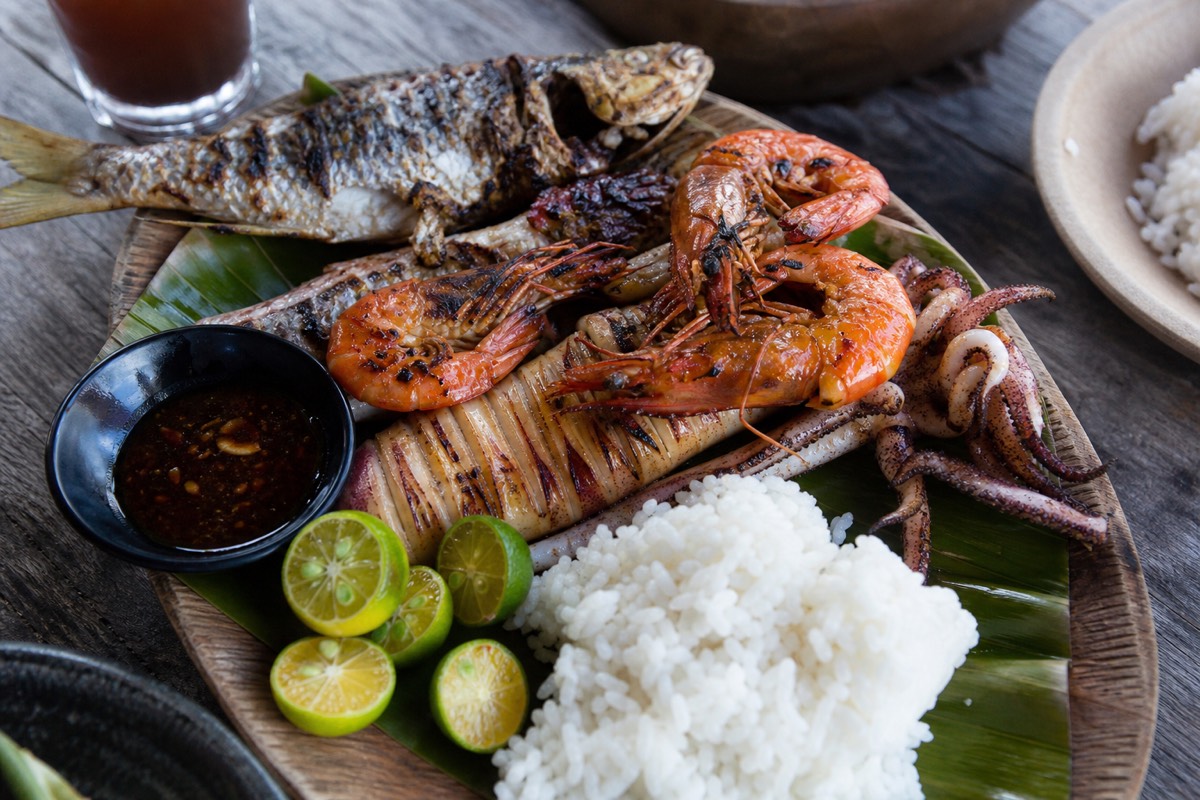
There is no single signature dish so much as a signature way of eating: whatever came off the boat that morning, grilled simply and served with rice. That runs from the picnic lunch on the water to the beachfront grills in town at night. It is affordable eating, too, with a full seafood plate in town costing a fraction of what the same meal runs at a Western beach resort. If you build your days around El Nido's island-hopping tours, you will eat two of the best meals of your trip out on the archipelago itself.
What Is On The Island-Hopping Beach Buffet Lunch?
Every group and private island-hopping tour includes a buffet or picnic lunch, usually grilled fish and meat, rice, noodles or vegetables, and fresh fruit, laid out on the boat or on a beach between snorkel stops. It is one of the best meals of the trip, eaten barefoot with the archipelago around you.
The crew grills as you swim, so lunch appears mid-tour without you lifting a finger, and it is part of the rhythm of the day rather than a stop you plan for. Expect a spread rather than a single plate: grilled fish and pork or chicken, steamed rice, a noodle or vegetable dish, and a pile of fruit cut on the boat. It is generous, and on a shared tour of up to around 25 people there is plenty to go round. Mask and snorkel gear and life jackets come with it too. The signature Tour A island-hopping route is the classic place to try it, with lunch served between the Big Lagoon and Seven Commandos Beach.
Which Filipino Dishes Should You Try In Town?
In town, order kinilaw (raw fish cured in vinegar and calamansi, the Filipino take on ceviche), chicken or pork adobo simmered in soy and vinegar, and sinigang, a sour tamarind soup. Pair any of them with seafood off the grill, and you have eaten the way El Nido actually eats.
None of these is fancy, and that is the point. Adobo is the everyday Filipino staple, sinigang is the comfort soup, and kinilaw is the coastal specialty that a fishing town does better than anywhere inland. Order them alongside grilled prawns or squid and you cover the whole range in one sitting. At the seafood grills you often pick your fish straight from the ice by weight and have it cooked to order, usually with garlic rice and a calamansi-and-soy dip on the side.
| Dish | What it is |
|---|---|
| Kinilaw | Raw fish cured in vinegar and calamansi, the Filipino ceviche |
| Adobo | Chicken or pork simmered in soy, vinegar, and garlic |
| Sinigang | A sour soup soured with tamarind, often with fish or pork |
| Grilled seafood | Fish, prawns, or squid off the coals, sold at the beach grills |
Where Do You Eat In El Nido Town?
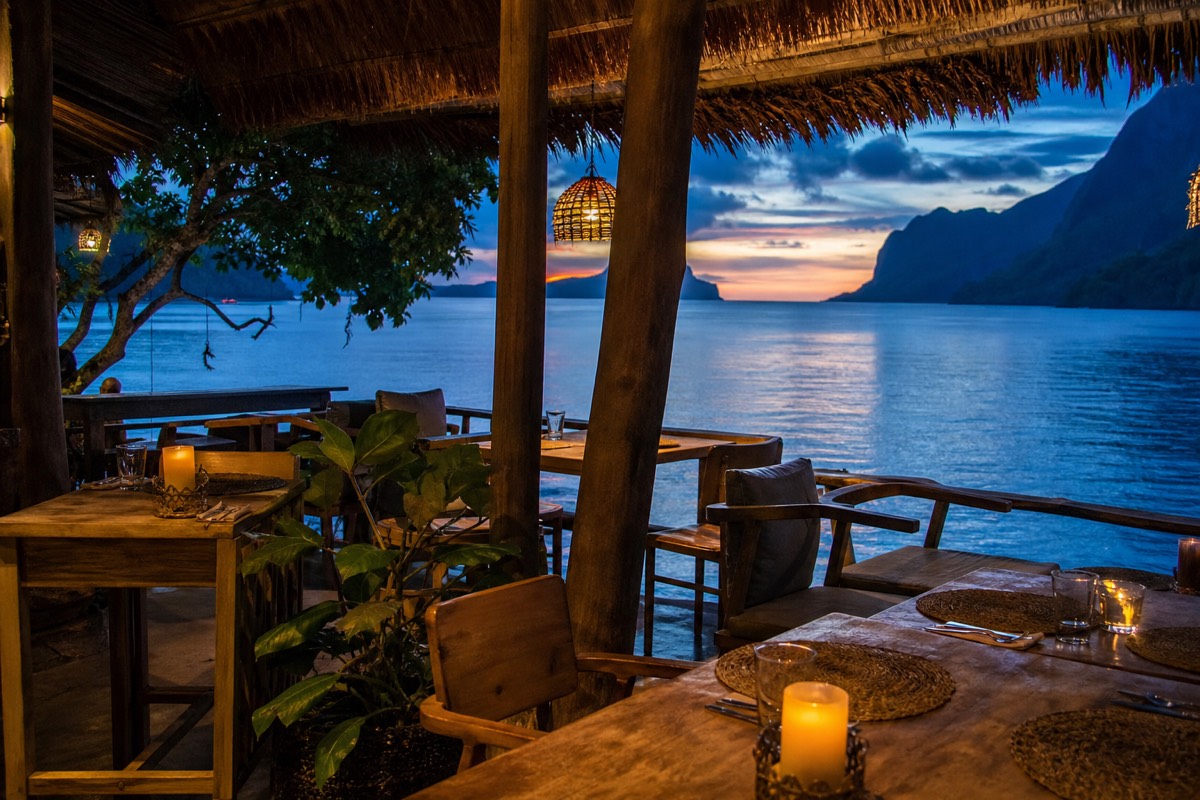
El Nido town is small enough to walk end to end, and its restaurant strip runs along a few streets near the beach. You will find everything from local carinderia eateries to beachfront grills and a handful of international kitchens, most of it casual, cash-friendly, and close to the water.

For sunset, the beachfront spots win; for a cheap fill, the local eateries a block back are better value. Do not skip dessert either. Halo-halo, the Filipino shaved-ice sundae layered with fruit, sweet beans, and leche flan, is on menus all over town and is the local answer to the heat. Our full guide to eating in El Nido maps out the strip and the standout dishes, and if you want to build a meal around a swim first, the beaches just outside town put you a short walk from the grills.
Is The Tropical Fruit Worth It?
Yes. Philippine mangoes are among the sweetest anywhere, and you will also find banana, pineapple, coconut, and calamansi used in everything from drinks to marinades. Fruit shakes are cheap, sold all over town, and the easiest way to cool down between a morning tour and an evening meal.

Calamansi, the small local citrus, turns up in the kinilaw cure and in half the drinks on the island, so you will taste it whether you order it or not. A mango shake after a day on the water costs very little and is close to a local ritual. Buy fruit straight from a market stall and it is cheaper still, and the dry months from around December to May tend to bring the sweetest mangoes of the year.
The short version: eat on the boat, eat on the beach, and keep it simple. When you book a day on the water, lunch comes built in, and reserving your island-hopping days ahead through El Nido Tours means the grilling is handled while you swim the lagoons.