El Nido Tour A Guide
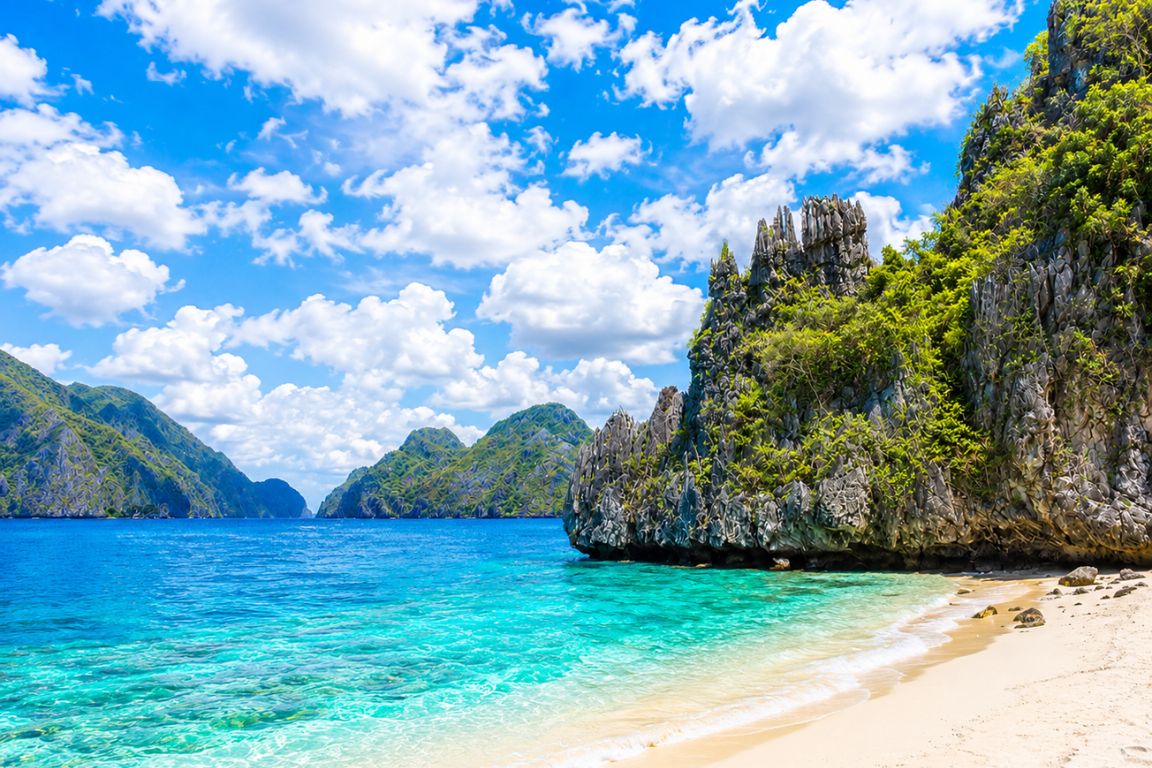
Tour A is the essential first island hopping experience in El Nido, combining the famous Big Lagoon, hidden beaches, limestone cliffs, and classic Bacuit Archipelago scenery in a single day.
Keep the guide’s route advice in mind, then compare the exact shared and private options after the complete article and answers. Compare Your El Nido Options Below.
Last updated: July 29, 2026
Tour A is the most popular island hopping route in El Nido, covering Big Lagoon, Secret Lagoon, Shimizu Island, Seven Commandos Beach, and Payong-Payong Beach. It runs from roughly 9am to 4pm by traditional bangka boat, includes a grilled seafood lunch, and costs PHP 1,200 per person for a group tour. The Big Lagoon entrance fee (PHP 200) and kayak rental (PHP 150 to 300) are paid separately. Do Tour A first on your visit. It is the defining El Nido experience and sets the benchmark for everything else.
| Stops | Big Lagoon, Secret Lagoon, Shimizu Island, Seven Commandos Beach, Payong-Payong Beach |
| Duration | 9am to approx. 4pm (7 hours) |
| Group tour price | PHP 1,200 per person - Prices verified June 2026 |
| Private boat price | PHP 7,000 to 9,000 total - Prices verified June 2026 |
| ETDF (eco fee) | PHP 400 one-time, valid 10 days - Prices verified June 2026 |
| Big Lagoon entry fee | PHP 200 per person - Prices verified June 2026 |
| Kayak rental (Big Lagoon) | PHP 150 to 300 per kayak - Prices verified June 2026 |
| What’s included | Bangka boat, licensed guide, life vest, grilled seafood lunch, snorkel gear (basic) |
| Departure point | El Nido Beach (main pier area), meet 8:00 to 8:30am |
| Best for | First-time visitors; lagoon lovers; anyone visiting El Nido |
- Tour A brings Big Lagoon, Secret Lagoon and beach stops together in one full day.
- Compare a shared boat with the verified private Tour A for your party.
- Check lagoon entry, kayak and equipment terms on the exact option you select.
What Is El Nido Tour A?
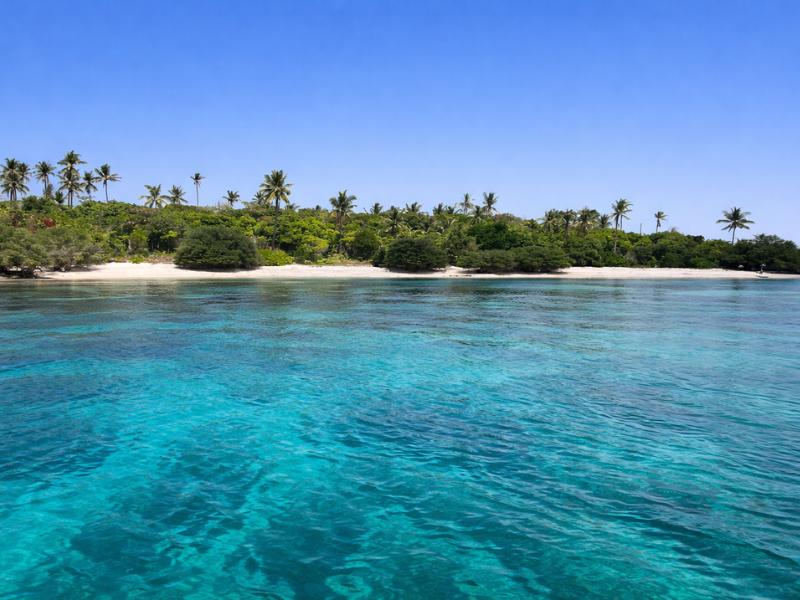
Tour A is the most popular island hopping route in El Nido, covering the lagoons and beaches of Miniloc Island and the surrounding Bacuit Archipelago. It is the tour most people imagine when they think of El Nido: towering karst walls, enclosed jade-green water, hidden coves, and long white sand beaches reached only by boat. For most travelers, Tour A should be the first day on the water and the experience against which everything else is measured.
The Bacuit Archipelago has 45 islands. Tour A (book group tour Explore Tour A: Big Lagoon And Island Beaches or private tour Explore Private Tour A With Lunch) covers a specific cluster centered on Miniloc Island, roughly 45 minutes by bangka from El Nido town pier. The route visits between four and five stops depending on conditions and operator, spending 45 to 60 minutes at each. The boat transit between stops is scenic enough that it doesn’t feel like dead time: karst towers rising from flat water, smaller islands with cliff faces dropping straight into the sea, the occasional flying fish breaking the surface ahead of the hull.
Tour A‘s popularity comes from what it concentrates in one day. The Big Lagoon is the defining image of El Nido, a wide enclosed body of water accessible only by kayak through a shallow channel in the cliff face. Secret Lagoon adds a second entry point, this one a narrow opening in the rock you swim or wade through to reach a sheltered pool on the other side. Shimizu Island has the best snorkeling on the route. Seven Commandos Beach is the social wind-down, a long coconut-lined stretch where the bangkas congregate in late afternoon and everyone arrives sun-tired and happy.
No other tour combines all of these in a single day. That’s why Tour A consistently leads bookings across all operators, and why 78 percent of first-time visitors to El Nido choose it as their opening tour.
What Are The Stops On Tour A?
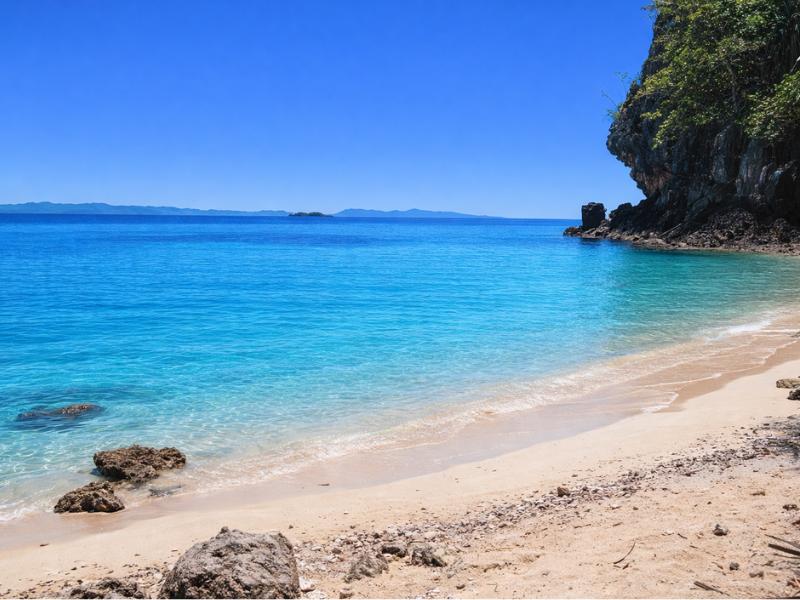
Tour A covers five main stops: Big Lagoon (the headline attraction, kayak entry), Secret Lagoon (swim-through rock opening), Shimizu Island (snorkeling and beach lunch), Seven Commandos Beach (long white sand final stop), and Payong-Payong Beach (a quieter alternative stop, sometimes swapped depending on conditions). The route order varies by guide and day based on crowd management and tides.
The order your guide sequences the stops matters more than most travelers realize before they arrive. The Big Lagoon has a capacity limit: the DENR restricts entry to 80 tourists on 40 kayaks per 90-minute window. When multiple group tour boats arrive simultaneously, queuing happens at the entrance channel. A guide who builds the route to reach the Big Lagoon early in the morning, before the main convoy of boats, gives you a fundamentally different experience from one who arrives mid-morning with everyone else.
Here is how a well-run Tour A typically flows on the ground:
- 8:00 to 8:30am: Meet at the operator’s office near El Nido Beach. Safety briefing. Life vests distributed. Boat departs.
- ~9:00am: First stop, usually Secret Lagoon or Shimizu Island (guides often open at a less-congested site while the Big Lagoon queue clears).
- ~10:00 to 11:00am: Big Lagoon. Kayaks rented at the entrance. Entry fee collected. 45 to 60 minutes inside.
- ~12:00pm: Lunch stop, typically Shimizu Island or a nearby beach. Grilled fish, chicken or pork, rice, fresh fruit.
- ~1:30 to 2:30pm: Payong-Payong Beach or another stop (some operators include a snorkel site here).
- ~3:00 to 4:00pm: Seven Commandos Beach. Final swim, coconut water from the beach bar, slow return to pier.
- ~4:00 to 4:30pm: Back at El Nido pier.
The sequence above is a guideline. Your guide can adjust the day for conditions and entry arrangements, and the verified shared listing says another stop may replace Big Lagoon if access is unavailable. Compare the group and private Tour A options, then confirm any specific lagoon or timing request before booking.
What Is The Big Lagoon Like?
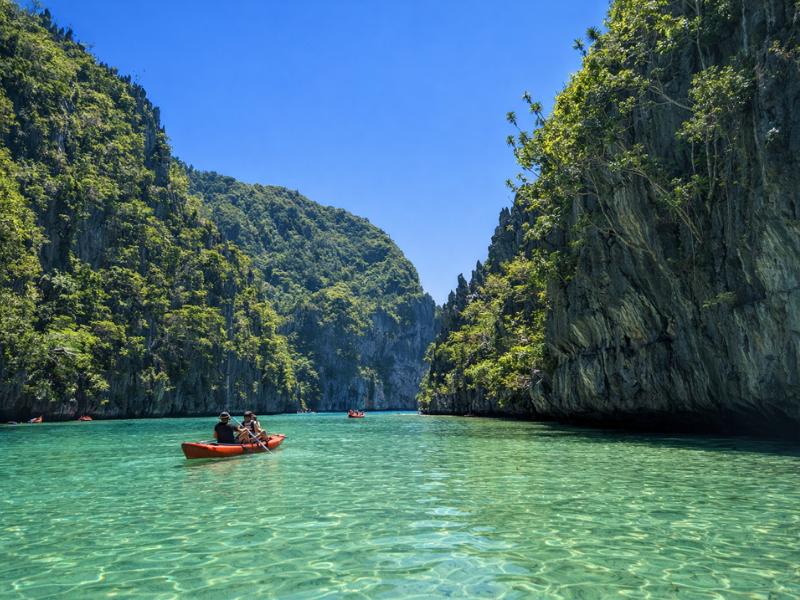
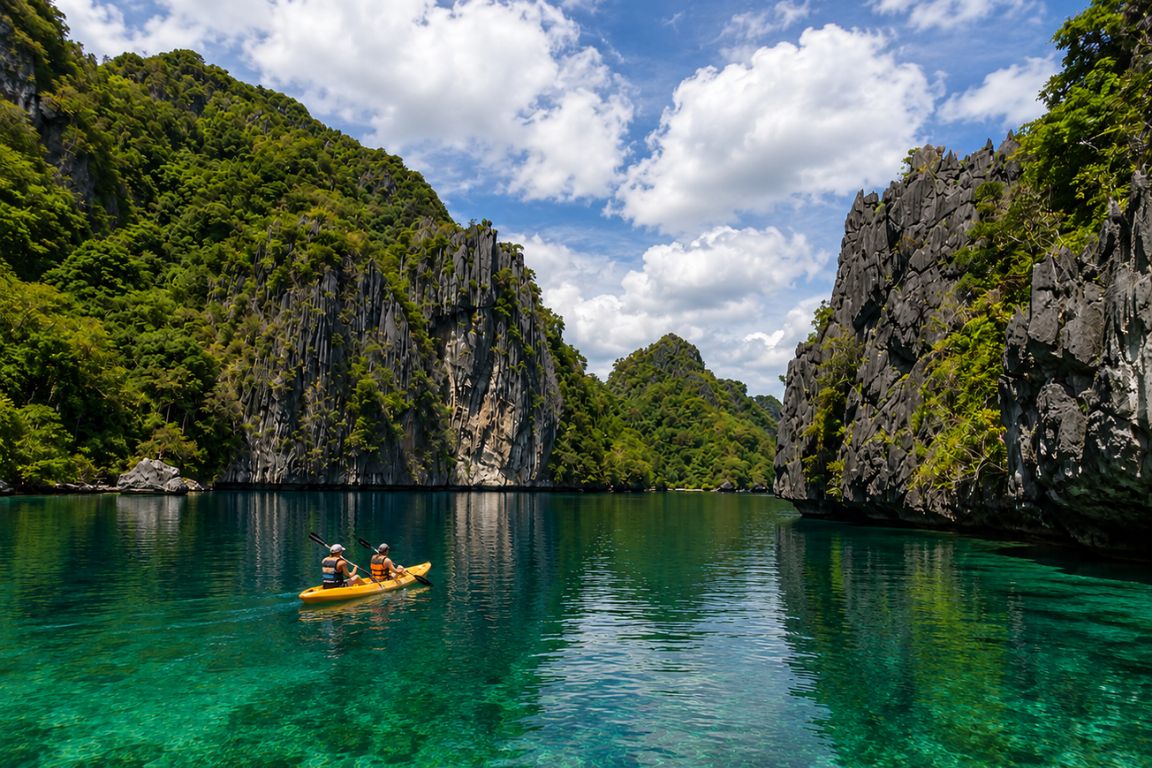 The Big Lagoon is an enclosed body of water on Miniloc Island, accessible only by kayak through a shallow channel between limestone walls. The entry fee is PHP 200 per person and kayak rental costs PHP 150 to 300. Inside, the lagoon opens into a wide, jade-green space surrounded by sheer karst cliffs rising 50 metres or more on every side. It is the most photographed site in the Bacuit Archipelago and the reason most first-time visitors choose Tour A.
Boats anchor outside the entry channel. They are not permitted further in because the channel is too shallow and the ecosystem too sensitive. From the anchoring point, you rent a kayak from the operators stationed at the entrance, paddle through the channel, and the lagoon opens around you.
The first thing that strikes you is the color. It shifts depending on the depth and the angle of the light: a translucent turquoise at the edges where it’s shallow, deepening into a dark jade toward the center. The walls rise straight on every side. When there aren’t too many other kayaks around, the only sounds are paddles and water. People go quiet without deciding to. It’s the kind of place where conversation feels like the wrong register.
Three sections make up the full lagoon. The narrow entry channel leads into the main body of water. To the left is a secondary passage that opens into a smaller, more enclosed space that most groups don’t explore because they don’t know it’s there. Spend five minutes paddling left instead of straight and you’ll find yourself somewhere with no other kayaks and walls you can touch on both sides. That passage is worth knowing about.
The water is swimmable and some travelers skip the kayak entirely, swimming in from the channel entrance. The center is deep enough that you can’t see the bottom. Snorkeling inside the lagoon itself is less interesting than the outer reef around Shimizu Island, but the walls underwater are worth a look if you have a mask.
The capacity limit of 80 tourists per 90-minute window means busy days have queues at the channel entrance. Arriving before 10am consistently avoids the worst of this. A private tour gives your party its own boat, but early departures and lagoon entry still require operator confirmation and depend on available entry arrangements.
Wondering whether Tour A’s big lagoon is worth prioritizing over Tour C’s secret beach or whether Tour B covers enough to skip the others entirely? This Tour A vs B vs C vs D guide covers the honest differences most El Nido travel blogs flatten into a generic recommendation.
What Is The Secret Lagoon Like?
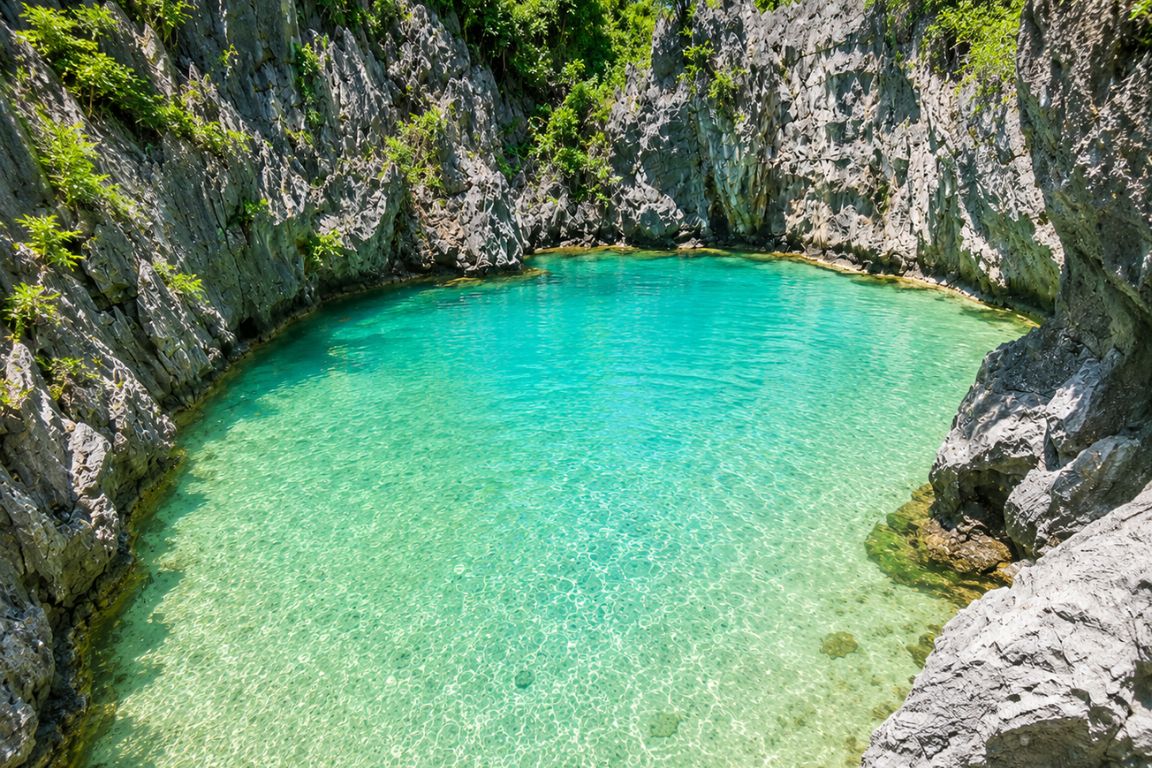 Secret Lagoon is a small enclosed pool hidden behind Miniloc Island’s cliff face, accessible through a low rock opening about 60 centimetres wide at chest height. You swim or wade through the opening, often partially submerged, to reach a shallow sheltered pool ringed by limestone walls with a sandy floor and a small beach on one side. It is quieter than the Big Lagoon, more physical to enter, and memorable specifically because the effort of getting there is part of the experience.
The approach to Secret Lagoon is anticlimactic on purpose. Your boat anchors off a cliff face that looks like more cliff face. There is no obvious entrance. The guide points to a gap in the rock that your brain initially rejects as a destination, then everyone starts swimming toward it.
The opening itself is low and tight. At high tide it sits closer to the waterline and the swim-through is wetter. At low tide there’s more headroom and you can partially wade rather than swim. Either way, the rocks around the entrance are sharp and slippery. Water shoes are not optional at this stop. The guide will tell you to watch your hands and feet. Listen to the guide.
Once through, the lagoon opens into a calm, shallow pool. The walls rise around you. A strip of sand runs along one side. The water is clear and warm. Some groups spend 20 minutes here and others spend 45. The intimate scale of it, and the fact that you had to physically problem-solve to enter, gives it a different quality from the Big Lagoon’s grandeur. It feels earned rather than witnessed.
The name has become somewhat ironic. Secret Lagoon appears on every Tour A itinerary and every Tour A visitor finds it. In peak season, the line of people waiting to swim through the entrance can stretch back into the water. Again, earlier departure time and a guide who sequences the route well makes an enormous difference to how this stop actually feels. Getting through the opening with four other people in the water beside you is different from doing it while 20 people queue behind you.
What Are Shimizu Island And Seven Commandos Beach Like?
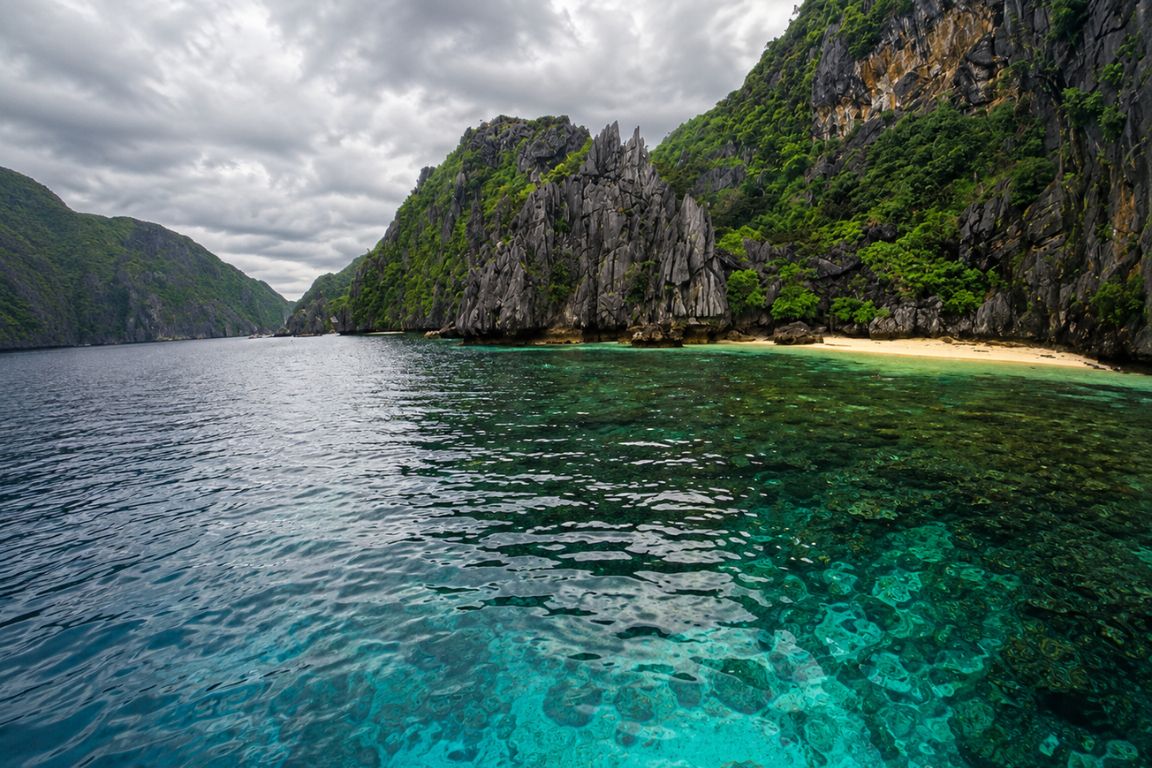 Shimizu Island is Tour A‘s primary snorkeling stop, with a shallow reef around the island’s perimeter, colorful coral gardens, and regular sightings of reef fish, clownfish, and occasionally sea turtles. It is also typically the lunch stop. Seven Commandos Beach is the tour’s final destination: a long, coconut-lined white sand beach with a small bar, calm swimming water, and a slow-paced atmosphere that works perfectly as the day’s wind-down.
Shimizu Island sits roughly in the middle of the Tour A circuit. The island itself is low and rocky with a narrow white sand beach, backed by the kind of dark limestone formations that appear in every El Nido photograph. The reef extends from the shoreline into shallow water, and the coral quality here is consistently rated among the better snorkeling on the tour routes, with regular clownfish sightings and the occasional sea turtle moving slowly below. Bring your own snorkel mask if you care about fit; the gear provided on group tours is functional but basic.
Lunch on Tour A is grilled seafood: fish, chicken, or pork, rice, fresh fruit. The quality varies by operator. Better operators serve this on a shaded beach or from a table setup on the shore. Some boats serve lunch on deck if the beach is too crowded with other tour groups. Either way, it is genuinely good food given the setting. Eat everything. The afternoon on the water is long and you’ll want the energy.
Seven Commandos Beach is where Tour A exhales. The beach stretches long and straight, backed by coconut palms, with clear shallow water ideal for a final swim. The small bar sells coconut water, cold drinks, and banana fritters that a surprising number of Tour A veterans specifically mention in reviews. The atmosphere here in late afternoon, tired tourists spread across the sand while bangka engines cool and guides compare notes, is exactly what the whole day has been building toward.
The name is said to come from seven soldiers, either Filipino guerrillas or Allied servicemen depending on the telling, who sheltered on this beach during World War II. The exact history is debated. What isn’t debated is that the beach is one of the more beautiful final stops on any island hopping route in the archipelago.
How Do You Book Tour A And What Does It Cost?
Group Tour A costs PHP 1,200 per person and can be booked through tour operators in El Nido town, at your accommodation, or through online platforms like Klook and GetYourGuide. The one-time Eco-Tourism Development Fee (ETDF) of PHP 400 is paid separately and is valid for 10 days across all tours. The Big Lagoon entrance fee (PHP 200) and kayak rental (PHP 150 to 300) are additional costs on the day. Private boat hire runs PHP 7,000 to 9,000 total for a group.
Booking Tour A is straightforward (book group tour Explore Tour A: Big Lagoon And Island Beaches or private tour Explore Private Tour A With Lunch). Most travelers book either through their accommodation the evening before, or through a street-level tour operator on Calle Hama or near the pier. In peak season (December to March), booking one to two days ahead is advisable, particularly if you want a morning departure time with a good operator.
Want to know which season delivers the most out of an El Nido island-hopping trip without the monsoon cancellations? Here’s our best time to visit El Nido tours guide so you don’t book the wrong time of year.
Online booking through Klook or GetYourGuide works but read the fine print carefully. Some listings quote a price that doesn’t include the ETDF or the lagoon entrance fee, while others bundle everything. The cheapest-looking price isn’t always the cheapest total. Clarify what’s included before confirming.
| Group tour (per person) | PHP 1,200 | Example only; current prices and inclusions vary by operator |
| ETDF (eco fee) | PHP 400 | One-time, valid 10 days, all tours |
| Big Lagoon entrance fee | PHP 200 | Per person, paid at lagoon entrance |
| Kayak rental (Big Lagoon) | PHP 150 to 300 | Per kayak (fits 2); optional but strongly recommended |
| Snorkel mask rental | PHP 100 to 150 | Optional; bring your own for better fit |
| Water shoes rental | PHP 50 to 100 | Strongly recommended; bring your own if possible |
| Private boat (total, not per person) | PHP 7,000 to 9,000 | For the whole boat; per-person cost drops with group size |
All prices verified June 2026 against El Nido Municipal Tourism Office records and operator price lists.
The private-versus-shared decision depends on your group size and the complete quotes available for your date. Compare the private total with the same number of shared seats, using equivalent fee and equipment assumptions. A private boat provides exclusivity aboard, while timing requests still need confirmation.
The difference between a private and group El Nido tour goes well beyond just the number of people on the boat - our private El Nido tours guide breaks down the flexibility, access, and overall experience difference that justifies the cost for the right traveller.
What Should You Know Before Doing Tour A?
The most important things to know before Tour A: bring water shoes (Secret Lagoon’s rocks are sharp and operators’ rental quality varies), rent the kayak at Big Lagoon without hesitation (the experience without it is significantly weaker), go early to avoid the mid-morning crowd surge, and book Tour A as your first tour, not your last. It is the defining El Nido experience and its impact is strongest when it’s your reference point for everything that follows.
Here is what matters on the day, from the perspective of guides who have run this route thousands of times:
Water shoes. The Secret Lagoon entrance has sharp, slippery limestone at foot level. The rocks around Shimizu Island are similarly unforgiving. You can buy water shoes in El Nido town for PHP 200 to 500 the night before. It is a small investment that prevents the kind of foot cut that ruins an afternoon. Don’t rely on the tour operator’s rental shoes unless you have no choice.
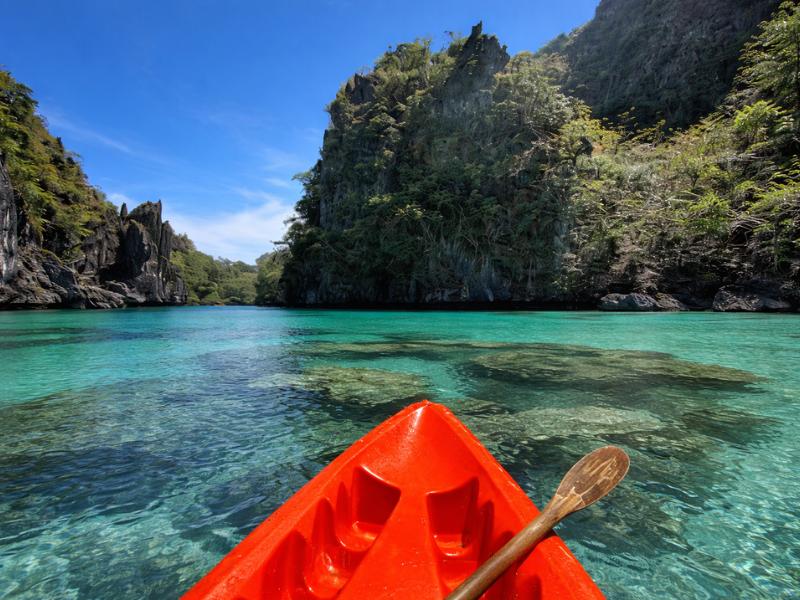
Kayak at Big Lagoon. Some travelers try to skip the kayak rental to save PHP 150 to 300. Don’t. You can swim the channel, but the lagoon’s scale only becomes apparent when you’re sitting in a kayak moving slowly through it. The secondary passage to the left of the main lagoon is inaccessible without a kayak. The photographs that people take home from El Nido and show everyone for years are almost all shot from a kayak inside the Big Lagoon. The rental fee is not optional for anyone who wants to understand why this place is famous.
Departure time. Tours officially depart at 9am but the coast guard must clear all boats first, and this can push departures to 9:30am or later. Meet at 8:00 to 8:30am as instructed. Operators who have their paperwork organized leave earlier. Earlier boats at Big Lagoon means fewer queues at the lagoon entrance and more space in the water.
Reef-safe sunscreen. This is not a nicety. El Nido’s protected marine area is under active environmental management. Conventional sunscreen with oxybenzone bleaches coral. Bring reef-safe sunscreen from home or buy it in town. The guides will notice if you don’t and will say something.
Cash for extras. The kayak rental, lagoon entry fee, coconuts at Seven Commandos Beach, and any snacks or cold drinks during the day are all cash transactions. Bring at least PHP 1,000 in small bills over and above the tour cost itself.
Planning a trip to one of the Philippines’ most stunning island destinations and not sure where to start? Here’s our how to visit El Nido tours guide so you plan it properly.
Tour A Insights From Our 8,200+ Guided Travelers
| First-time visitors who chose Tour A as opening tour | 78% |
| Travelers who rented kayak at Big Lagoon | 91% |
| Most cited highlight of Tour A | Big Lagoon kayaking (63%), Secret Lagoon entry experience (24%) |
| Travelers who skipped kayak and regretted it | 84% of those who skipped |
| Most common preparation mistake | No water shoes (41%), insufficient cash for extras (29%) |
| Average time at Big Lagoon | 55 minutes |
| Travelers who rated Tour A as their trip highlight | 58% (Tour C rated higher by 61% of those who did both) |
| Private vs group tour split | 34% private, 66% group |
Frequently Asked Questions
Is Tour A the best El Nido island hopping tour?
Tour A is the most iconic and the right first choice for nearly all visitors. It covers the Big Lagoon, which is the defining image of El Nido, and combines lagoon exploration, snorkeling, and beach time in one day. Tour C is rated slightly higher by travelers who do both, but Tour A is the stronger opening experience and the right starting point.
Can you swim in the Big Lagoon without a kayak?
Yes, technically. You can swim the entry channel and into the main lagoon. But the lagoon’s scale is best appreciated from a kayak, and the secondary passage to the left of the main body is not reachable by swimming efficiently. The vast majority of travelers who skip the kayak to save money regret the decision afterward. Rent the kayak.
How crowded is Tour A?
Tour A is the most popular tour and the most crowded, particularly at the Big Lagoon and Secret Lagoon in peak season (December to March). The DENR caps Big Lagoon entry at 80 tourists per 90-minute window, which means queues on busy days. Early departure (boats leaving closer to 9am than 10am) significantly reduces the crowd experience at both lagoons. Private tours give you timing control that group tours don’t.
Do you need to know how to swim for Tour A?
Basic swimming ability is strongly recommended. The Secret Lagoon entry involves wading and partial swimming through a rock opening. Life vests are provided for all passengers on the boat, but there are stretches of Tour A where non-swimmers will feel limited. If you cannot swim confidently, inform your operator at booking so the guide can assist you specifically at each stop.
What should you bring for Tour A?
Water shoes (non-negotiable for Secret Lagoon), reef-safe sunscreen, a waterproof bag or dry bag for your phone and valuables, at least PHP 1,000 in small cash bills for extras, a change of clothes and a towel, and if you have your own snorkel mask, bring it. Everything else, including the kayak and basic snorkel gear, is available on the day.
Should you do Tour A or Tour C first?
Tour A first. It covers El Nido’s most iconic sites and calibrates your sense of the archipelago. Every subsequent tour is experienced relative to what Tour A established. Doing Tour C first and saving Tour A is a common attempt to build toward a peak that rarely works as planned. The Big Lagoon hits hardest when it’s your first lagoon.
Ready to book Tour A?Compare group Tour A and private Tour A to see inclusions, group size, and meeting times. Group and private options available. Open the group Tour A listing to see inclusions and dates. Written by Ethan Reyes
Philippine tour guide since 2014 · Founder, El Nido Tours
Ethan has guided over 8,200 travelers through El Nido, the Bacuit Archipelago, and Palawan since founding the agency.