Tour A Vs B Vs C Vs D - What’S The Difference?
Discover El Nido’s four island hopping tours: Tour A for lagoons, Tour C for snorkeling, Tour B for caves, and Tour D for quieter beaches.
Keep the guide’s route advice in mind, then compare the exact shared and private options after the complete article and answers. Compare Your El Nido Options Below.
Last updated: July 29, 2026
There are four official island hopping routes in El Nido, each covering a different part of the Bacuit Archipelago. Tour A is the most popular, centered on the Big Lagoon and iconic cliffs. Tour C covers the outer islands with better snorkeling and fewer crowds. Tour B is the least crowded, featuring caves and the Snake Island sandbar. Tour D is the quietest option, ideal for a second or third day. Most travelers do Tour A first, then Tour C. Budget PHP 1,200 to 1,600 per person per tour, plus the one-time PHP 400 eco fee.
| Tour A | Lagoons and beaches | High | PHP 1,200 + PHP 200 lagoon fee | First-timers, iconic experience |
| Tour B | Caves and sandbars | Low | PHP 1,200 | Cave lovers, crowd-avoiders |
| Tour C | Hidden beaches and outer islands | Medium | PHP 1,200-1,600 | Snorkelers, beach explorers |
| Tour D | Quiet lagoons near Cadlao | Low | PHP 1,200 + PHP 200 lagoon fee | Repeat visitors, peaceful days |
*Prices verified June 2026. One-time ETDF (PHP 400) required separately, valid for 10 days across all tours. Kayak rental approximately PHP 150 extra where lagoon entry applies.
- A focuses on Big Lagoon, B on caves and Snake Island, C on hidden beaches, and D on Small Lagoon and Cadlao.
- Choose by the experience you want, then reserve a full day for each selected route.
- Compare shared and private options using actual quotes and the exact provider itinerary.
What Are The Four El Nido Island Hopping Tours?
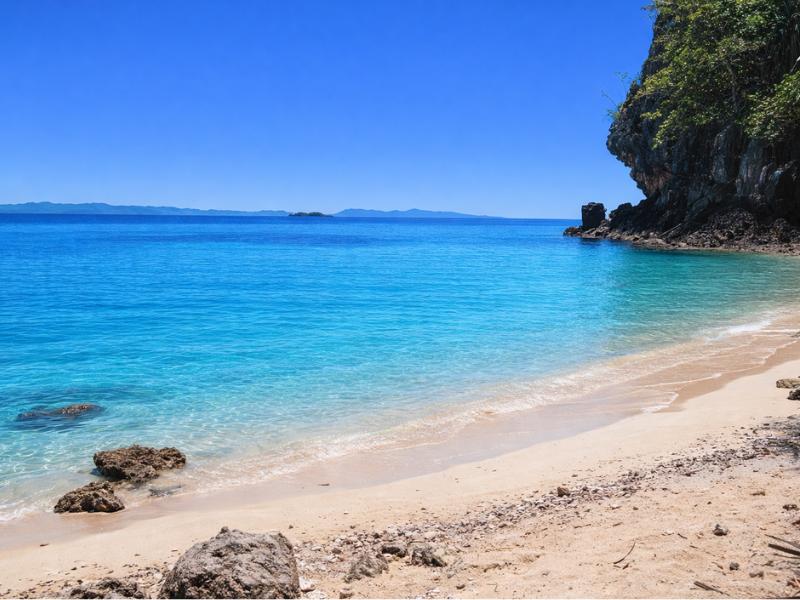
Tours A, B, C, and D are the four official island hopping routes in El Nido, each covering a distinct section of the 45-island Bacuit Archipelago. They run daily from El Nido Beach, 9am to roughly 4 or 5pm, by traditional outrigger bangka boat. All four include a grilled seafood lunch on a beach and basic snorkel gear. The routes are standardized, meaning the destinations are the same regardless of which operator you book through.
The bangka is a narrow outrigger boat with bamboo arms on each side for stability. It seats 15 to 25 people on group tours, though numbers vary by operator and season. You’ll spend roughly 45 to 60 minutes at each stop, with boat transit between them. The transit time isn’t dead time. The ride through the Bacuit Archipelago, past karst walls rising straight from the water and smaller islands with beaches tucked behind rock headlands, is part of what makes the day.
A few things apply to all four tours. The one-time Eco-Tourism Development Fee (ETDF) of PHP 400 is required before any tour and is valid for 10 days across all routes, so you only pay it once per trip. Route order on any given day is decided by the guide based on weather, tide, and how other boats are moving through the same sites. Your guide may reorder the stops. That’s normal and usually works in your favor.
The routes do not overlap. Tour A and Tour D both visit lagoons on Miniloc and Cadlao Islands but cover different ones. Tours C and B cover completely separate geographic zones. If you have four days in El Nido, you can do all four without repeating a single destination.
We’ve put together a full operator comparison in our best El Nido island hopping tours guide so you know exactly which experience fits your budget, group size, and which route you’re planning to do.
What Does Tour A Cover And Who Is It Best For?
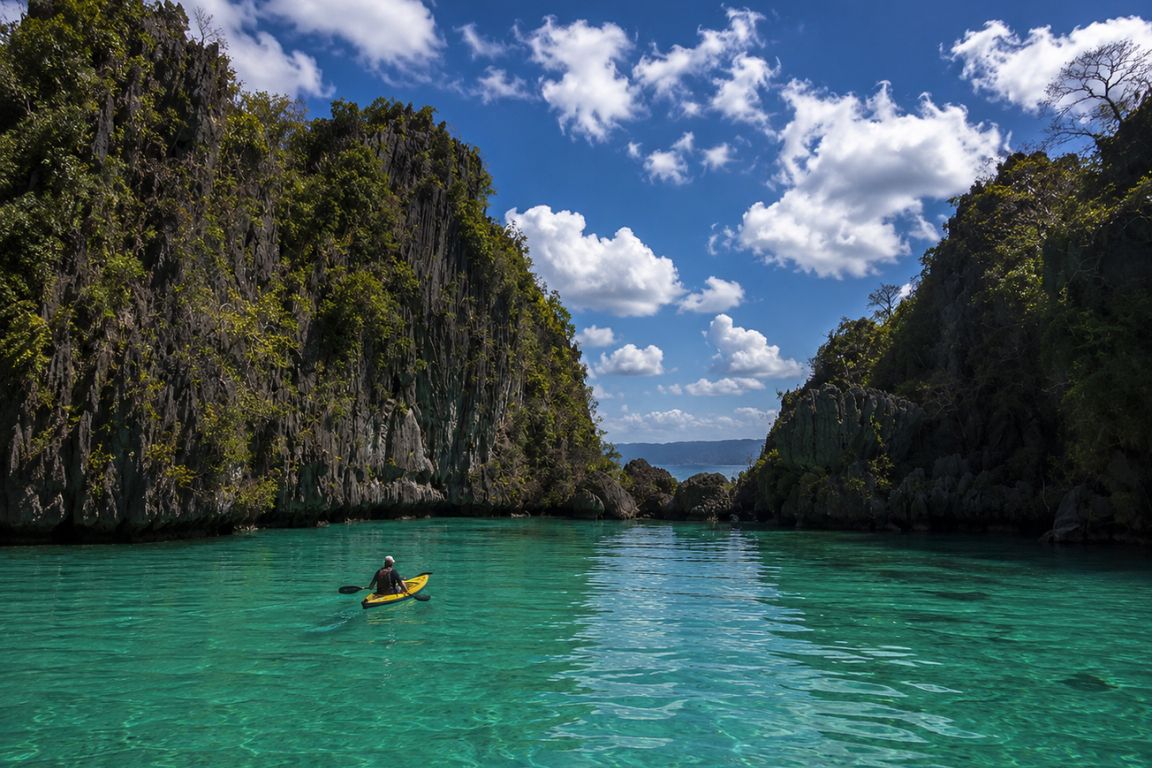
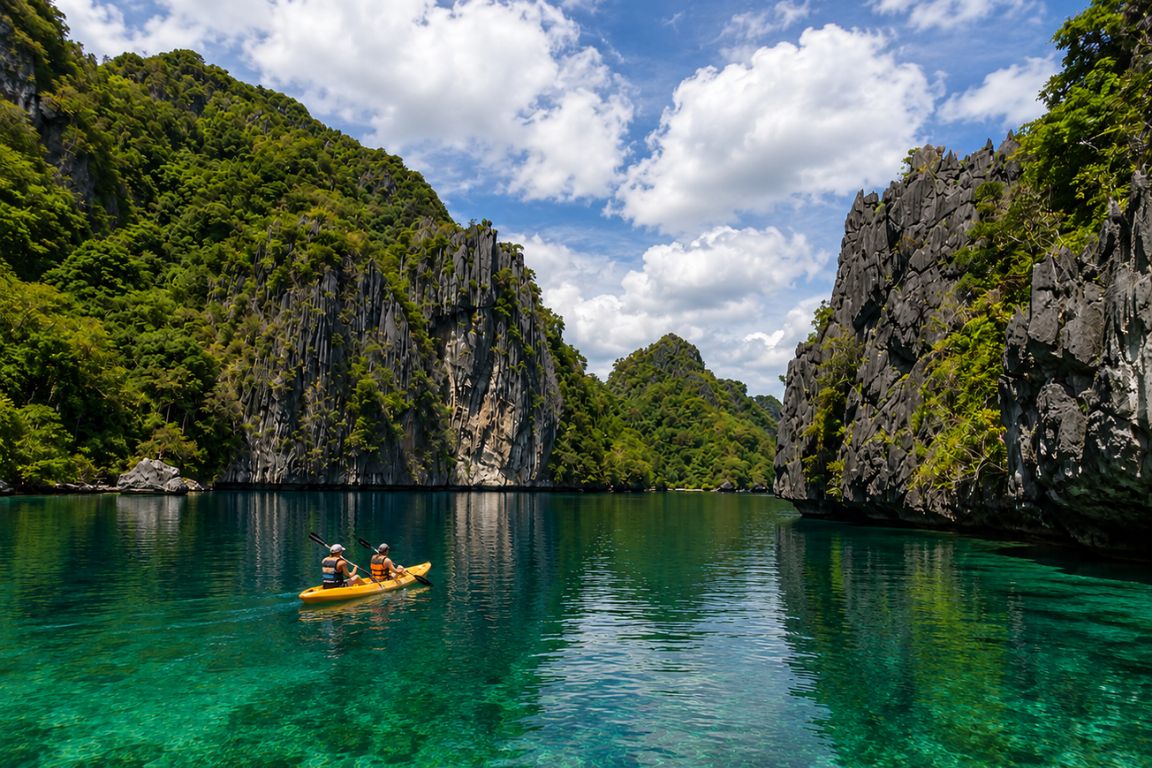 Tour A covers Big Lagoon, Secret Lagoon, Shimizu Island, Seven Commandos Beach, and Payong-Payong Beach. It is the most popular tour in El Nido and the right starting point for most first-time visitors. The Big Lagoon is the headline attraction, a wide enclosed body of water surrounded by sheer karst walls, accessible by kayak. Expect crowds, especially at peak season.
The Big Lagoon is where Tour A earns its reputation. You approach by kayak through an opening in the cliff wall, and then the space opens up around you: water the color of jade, limestone rising on every side, the sounds of the open sea completely cut off. It’s one of those places where people go quiet without deciding to. The entry fee of PHP 200 per person for the lagoon is paid separately from the tour cost, and kayak rental is an additional PHP 150. Both are worth it.
Secret Lagoon is smaller and accessed through a crack in the rock face wide enough for one person at a time. On the other side is a sheltered pool with a sandy floor and dramatic walls. Most groups spend 20 to 30 minutes here. It’s a good photo spot and a sharp contrast to the scale of Big Lagoon.
Shimizu Island is the snorkeling stop. Visibility here is generally strong in dry season, with healthy coral and regular reef fish. Seven Commandos Beach is the day’s wind-down, a long stretch of white sand backed by coconut trees where the boat brings lunch or you can swim in calm shallow water before heading back.
The honest note on Tour A (book group tour Explore Tour A: Big Lagoon And Island Beaches or private tour Explore Private Tour A With Lunch): it gets crowded. In December through March, multiple boats arrive at Big Lagoon within the same window. The experience at the lagoon is dramatically better if your guide gets there early. Departure time and route order management matter more on Tour A than on any of the others. This is the single biggest reason it matters who you book with. If you’d rather hand the logistics to a listed operator, open the Tour A group departure to compare dates and inclusions.
Want to know what El Nido’s most popular island-hopping route actually covers before you commit to a full day on the water? Here’s our El Nido Tour A guide so you arrive knowing what to expect.
What Does Tour B Cover And Who Is It Best For?
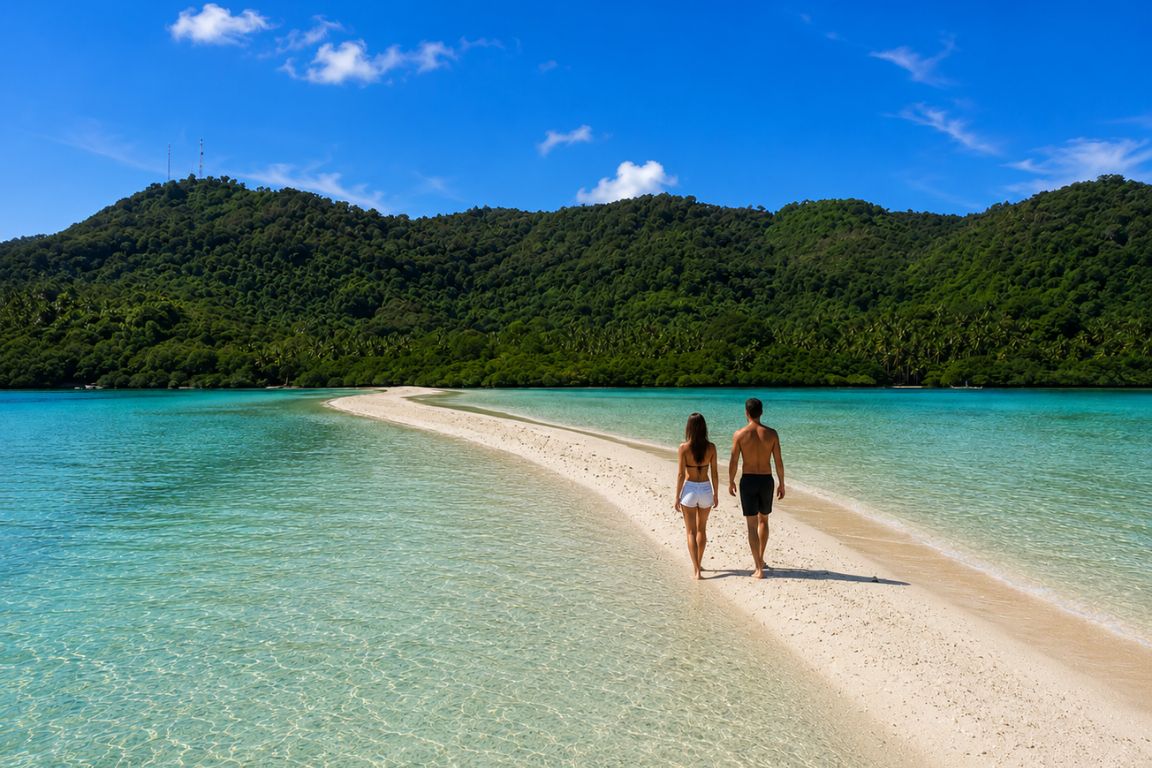 Tour B covers Snake Island, Cudugnon Cave, Cathedral Cave, Entalula Beach, and Pinagbuyutan Island. It is the least crowded of the four standard tours and the best choice for travelers interested in geology and history rather than lagoons. Snake Island’s tidal sandbar is the visual highlight. Cudugnon Cave is an archaeological site where Sung Dynasty pottery was discovered.
Snake Island is what people remember about Tour B. At low tide, a curved sandbar appears between two islands, a thin pale stripe cutting through open turquoise water on both sides. It looks like something out of a nature documentary, and the timing matters: if the tide is too high, the sandbar disappears. A good guide checks the tide before building the day’s route order.
Cudugnon Cave is a different kind of stop. It’s not a dramatic cavern but rather a small archaeological site where pottery fragments dating to the Sung Dynasty (960 to 1279 AD) were excavated, suggesting the cave served as a Neolithic burial site centuries before any tourist set foot here. During World War II, locals used it as a hiding place from Japanese forces. The cave requires a short scramble through a narrow rock opening. Inside, natural light filters in through gaps in the ceiling. It’s genuinely interesting if you know the context. Cathedral Cave, nearby, is larger and more dramatic in scale, with chamber walls that rise like cathedral arches.
Entalula Beach is the designated lunch stop on most Tour B runs, a pristine white sand beach with strong snorkeling on the far side. Pinagbuyutan Island adds another limestone-and-beach combination later in the day. The pace is noticeably more relaxed compared to Tour A, with fewer boats at each stop and more time actually in the water.
Tour B (book group tour Explore El Nido Tour B: Caves and Snake Island or private tour Explore El Nido Private Tour B with Lunch) is the right call for travelers who want a quieter day, are curious about the area’s cultural history, or have already done Tour A and want something different. It’s also the tour most underestimated by first-timers, who tend to skip it without realizing Snake Island is one of the more unusual sights in the entire archipelago.
Not sure whether Tour B is worth doing alongside Tour A or whether it covers enough different ground to stand on its own? Check out our El Nido Tour B guide before you book anything.
What Does Tour C Cover And Who Is It Best For?
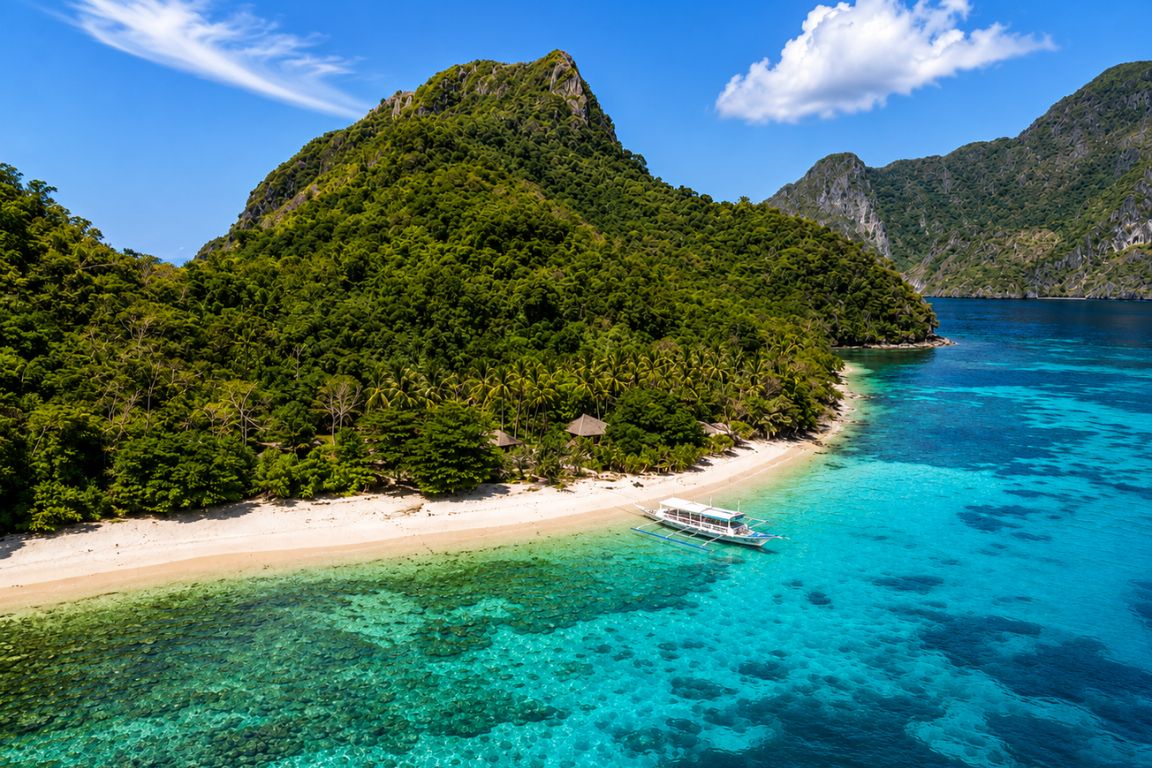 Tour C covers Helicopter Island, Matinloc Shrine, Secret Beach, Hidden Beach, and Tapiutan Island. It reaches the furthest from El Nido town and offers the best snorkeling of the four standard routes. Secret Beach, accessible only by swimming through a crack in the cliff face, is the most physically dramatic stop on any of the tours. Most experienced travelers rate Tour C as their favorite by the end of their trip.
The boat ride out to Tour C‘s zone takes longer than the others. You leave the inner bay behind and start seeing the outer island chain, bigger cliffs, more exposed coastline, and water that shifts from green to a deeper blue as the depth increases. Helicopter Island gets its name from the aerial view: its shape resembles a rotary aircraft. Up close, it’s a long beach backed by high limestone, with snorkeling off the far end that is consistently rated among the best in El Nido for reef health and fish density.
Secret Beach is a short swim through a narrow opening in a cliff wall. The passage is tight, maybe 60 centimetres wide at chest height. You push through and arrive in an enclosed lagoon with white sand, clear shallow water, and limestone walls on all sides. There’s nothing else out there. No infrastructure, no kiosks, no staff. Just the rock, the water, and however many people swam through before you. In peak season, that number climbs. On an early-departing boat with a guide who sequences the route well, you can arrive before the other tours and have it nearly to yourself for 20 minutes.
Hidden Beach is a similar concept: access through dense foliage and rock, a hidden cove on the other side. Matinloc Shrine is an abandoned white chapel on a small beach at Matinloc Island. It’s a short stop, part religious artifact and part photo spot, with decent snorkeling nearby off the Matinloc wall.
Tour C (book group tour Explore El Nido Tour C: Hidden Beaches and Shrine or private tour Explore El Nido Private Tour C with Lunch) runs longer than Tours A and B because of the distance traveled. Plan for a 5pm return. It’s a full day, and worth every hour of it. Questions before you book? The Tour C group page lists duration, inclusions, and current dates.
Tour C is the route most repeat El Nido visitors rate above Tour A once they know what they’re looking for - our El Nido Tour C guide breaks down what makes each stop worth the full day on the water.
What Does Tour D Cover And Who Is It Best For?
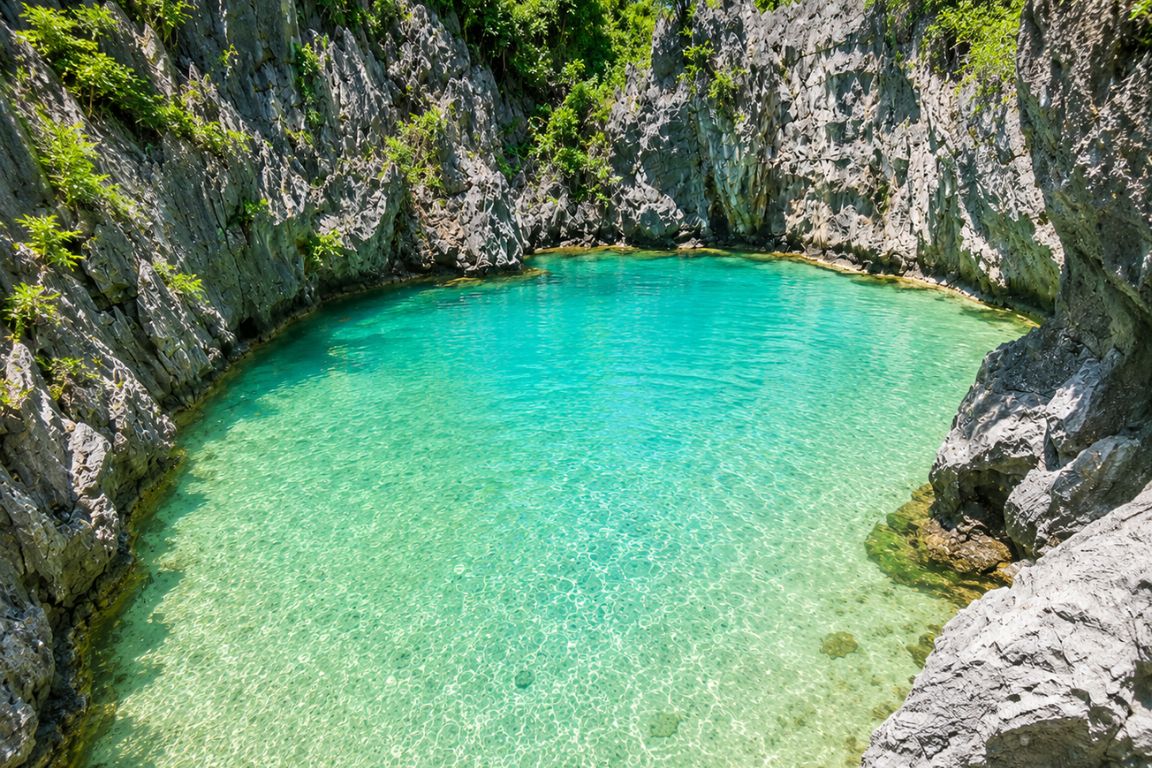
 Tour D covers Cadlao Lagoon, Small Lagoon, Nat Nat Beach, Paradise Beach, Pasandigan Cove, and Bukal Island. It is the quietest of the four tours and operates closest to El Nido town. The lagoons at Cadlao are calmer and less trafficked than those on Tour A. Tour D is best for travelers wanting a second lagoon day without the crowds, or anyone seeking a more relaxed pace.
Cadlao is the largest island in the Bacuit Archipelago and sits just outside El Nido town. Its lagoon is turquoise, relatively enclosed, and rarely packed with boats the way Big Lagoon gets during peak weeks. The best coral is outside the lagoon entrance rather than inside it, so the snorkeling involves a short swim beyond the kayak zone. The interior of the lagoon has several small pocket beaches where you can dock a kayak and just sit for a few minutes in complete silence.
Small Lagoon appears on both Tour A itineraries with some operators and on Tour D depending on the municipal scheduling of boat access. When it’s included, it’s the more intimate counterpart to Big Lagoon: narrower walls, shallower water, a stronger feeling of enclosure. The PHP 200 entry fee and PHP 150 kayak rental apply here as well.
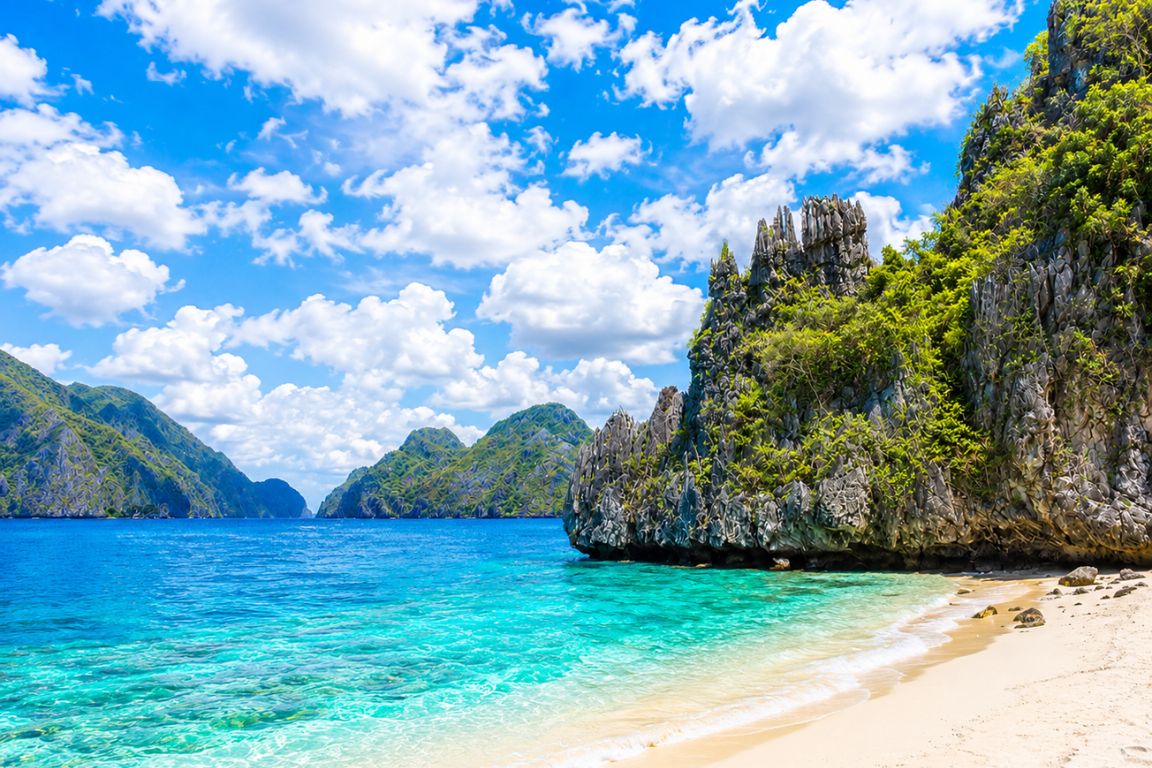
The beaches on Tour D, particularly Nat Nat and Paradise Beach, are among the least visited in the entire archipelago. Cliffs on both sides, powdery sand, and on most days no more than two or three other boats anywhere nearby. More than one traveler in our groups has said these were the nicest beaches they visited across their entire El Nido trip, including Tours A and C.
Tour D (book group tour Explore Tour D: Small Lagoon And Cadlao or private tour Tour D Shared/Private Options) is not the tour to do first. It works best as a contrast after you’ve seen the more famous sites, or for travelers who specifically want a slower, quieter day over the spectacle of lagoon entry queues.
Want to explore Cadlao Lagoon, Bukal Beach, and the less visited northern islands without the crowds that follow Tour A everywhere? Here’s our El Nido Tour D guide so you get the most out of it.
Which Tour Should You Do First?
 Do Tour A first. It covers El Nido’s most iconic sites and sets the baseline for everything else. Doing it first means you experience the Big Lagoon with no prior comparison, which is when the impact is strongest. After Tour A, Tour C is the logical second day for most visitors. Tour B and Tour D work well as day three and four in any order.
The logic is simple. Tour A contains the images most people associate with El Nido before they arrive. The Big Lagoon, the Secret Lagoon, the coconut-lined stretch of Seven Commandos. Doing it first anchors your mental map of the place. Every subsequent tour adds to it rather than working against unmet expectations.
Some travelers try to be clever about this and save Tour A for last, reasoning that they want to build toward the best. It rarely works as planned. Tour A on day four, after three days in the water, tends to feel like revisiting a greatest hits album when you’ve already memorized the songs. Do it fresh, on day one or two.
Tour C is consistently the tour that surprises people most, which makes it the strongest follow-up. After the enclosed drama of the lagoons, the outer island scale of Tour C hits differently. The snorkeling is better. The distances are longer. Secret Beach requires actual effort to enter. It is a harder day, and most people leave rating it equal to or above Tour A.
| 2 days | Tour A, Tour C | The two non-negotiables. Cover the lagoons and the outer islands. |
| 3 days | Tour A, Tour C, Tour B or D | Add Tour B for caves and sandbar, Tour D for a quieter lagoon day. |
| 4 days | Tour A, Tour C, Tour B, Tour D | Full coverage. Leave a rest day between tours if possible. |
| 5+ days | All four tours + free exploration | Use extra days for Nacpan Beach, Taraw Cliff, or independent kayaking. |
Can You Do More Than One Tour And In What Order?
 Yes. The four tours cover completely separate parts of the Bacuit Archipelago with no overlapping destinations, so doing all four is possible and worthwhile over a 4 to 5 day stay. Most travelers do one tour per day, using rest days for independent beach time or inland exploration. Consecutive tour days are doable but tiring; one day off between tours gives you more energy at each stop.
The itinerary question we hear most from our groups is whether to cluster tours back to back or space them out. Our practical answer is this: if you have five days, do tours on days 2, 3, and 5, with days 1 and 4 as arrival and rest days. If you have four days, doing tours on days 2, 3, and 4 works but you’ll feel it by the last afternoon. Three consecutive water days sounds manageable until you’re on hour seven of day three with saltwater still in your ears from the previous morning.
A note on combining tours in one day: some private operators offer combination routes that hit highlights from two standard tours, for example, big lagoon spots from Tour A paired with outer beaches from Tour C. These combo routes are physically exhausting and compress the time at each stop. They work well for travelers with only one day in El Nido who want maximum coverage. For anyone staying two or more days, dedicated tours give you a better experience at each destination.
One practical timing note: Tour A and Tour C both share some infrastructure in terms of boat traffic around the lagoon and Secret Beach areas in peak season. If you’re doing both, the order matters less than the departure time. Getting your boat in the water by 8:30am on both days makes a bigger difference to your experience than which tour you do first.
Trying to figure out whether three days covers the best of El Nido or whether a full week makes a meaningful difference? Check out our how many days do you need in El Nido tours guide before you lock in your itinerary.
Tour Preferences From Our 2025 El Nido Traveler Groups
| First tour booked by first-time visitors | Tour A - 78% |
| Rated Tour C as favorite by end of trip | 61% |
| Travelers who did Tour B | 41% - most on day 3 or 4 |
| Travelers who did Tour D | 29% - mostly 5+ day visitors |
| Most common post-trip regret regarding tours | Skipping Tour B (38% of those who didn’t do it) |
| Preferred private over group tour | 34% - mostly couples and families |
| Most cited highlight across all tours | Big Lagoon kayaking (Tour A) and Secret Beach swim-through (Tour C) |
How Do Private Tours Compare To Group Tours?
Group tours cost PHP 1,200 to 1,600 per person and run with 15 to 25 people on a shared bangka. Private tours cost PHP 7,000 to 9,000 for the whole boat, making them cost-competitive for groups of four or more. The difference is flexibility: private tours can reorder stops, linger longer, and combine destinations from different standard routes. For couples and families, private is often worth the cost difference.
The practical math works like this. A private boat for Tour A runs about PHP 7,500 to 9,000 total. Split between two people that is PHP 3,750 to 4,500 each, roughly three times the group rate. Split between four people it comes to PHP 1,875 to 2,250 each, meaningfully above the group rate but getting closer. For six people, the per-person cost drops below PHP 1,500, which is barely more than the group tour and buys you a boat to yourselves.
Beyond cost, the real difference is time management. On a group tour, the guide keeps everyone moving on the same schedule. At Big Lagoon, you have however long the guide allows before the boat needs to leave. On a private tour, if your group wants an extra 20 minutes in the water, the boat waits. If two people aren’t interested in a particular beach, the guide can adjust. The route can blend stops from different standard tours if you want a custom day.
The trade-off is social. Group tours have a casual energy that some travelers genuinely enjoy. Solo travelers and those who like meeting people often get more out of the group format. You end up sharing a boat with strangers for six hours, and on good days those strangers become dinner companions. That doesn’t happen on a private charter.
One important clarification: when operators advertise a “private tour” at suspiciously low prices, verify what you’re getting. Private means your group has the whole boat. Some operators use the word loosely to mean a different booking channel that still puts you with strangers. Clarify before you pay. Compare a group Tour A with a private Tour A if you are weighing shared-boat price against having the bangka to yourselves.
The difference between a private and group El Nido tour goes well beyond just the number of people on the boat - our private El Nido tours guide breaks down the flexibility, access, and overall experience difference that justifies the cost for the right traveller.
Frequently Asked Questions
Is Tour A or Tour C better?
They are different enough that comparing them directly isn’t straightforward. Tour A is the iconic lagoon route and the right first-day choice. Tour C covers the outer islands with better snorkeling and more dramatic beach access. Most travelers who do both end up rating Tour C slightly higher by the end of their trip, but Tour A’s Big Lagoon is still the defining El Nido experience. Do both if you have the time.
Which tour has the best snorkeling?
Tour C consistently offers the strongest snorkeling, particularly around Helicopter Island and the Matinloc wall. Tour A’s snorkeling at Shimizu Island is good. Tour B has decent reef at Entalula Beach. Tour D’s best snorkeling is outside the Cadlao Lagoon entrance rather than inside it. For coral quality and fish density, Tour C leads.
Is Tour B worth doing?
Yes, particularly if you have three or more days in El Nido and are looking for something different from the lagoon routes. Snake Island’s tidal sandbar is one of the more unusual sights in the archipelago. The caves add historical context that the other tours don’t have. And the crowd levels are genuinely lower, which makes the beaches and stops feel more like your own.
Can you do Tour A and Tour C on the same day?
Some private operators offer combined routes that hit highlights from both tours, and it is physically possible. It makes for an exhausting day with compressed time at each stop. For anyone with two or more days in El Nido, separate tour days are worth it. You’ll actually be in the water instead of rushing through for a photo.
What time do the tours start and end?
Most tours depart around 9am and return between 4 and 5pm. Tour C runs slightly longer due to the distances involved. Hotel pickup for guests staying in El Nido Town is usually around 8:30am. Factor in delays: Filipino island time is real, and boats rarely leave precisely at 9.
Do all tours include lunch?
Yes. All four standard tours include a grilled seafood and rice lunch prepared by the boat crew and served on a beach. The spread typically includes grilled fish, chicken or pork, rice, and fresh fruit. Dietary requirements can usually be accommodated if communicated at booking. Bring your own drinks beyond water.
Not sure which tours are right for your trip?Our guides have run Tour A, Tour B, Tour C, and Tour D thousands of times. We know which routes work best by season, by group type, and by how many days you have. Most travelers start with Tour A, then add Tour C if they have a second day. Written by Ethan Reyes
Philippine tour guide since 2014 · Founder, El Nido Tours
Ethan has guided over 8,200 travelers through El Nido, the Bacuit Archipelago, and Palawan since founding the agency.