El Nido Tour D Guide
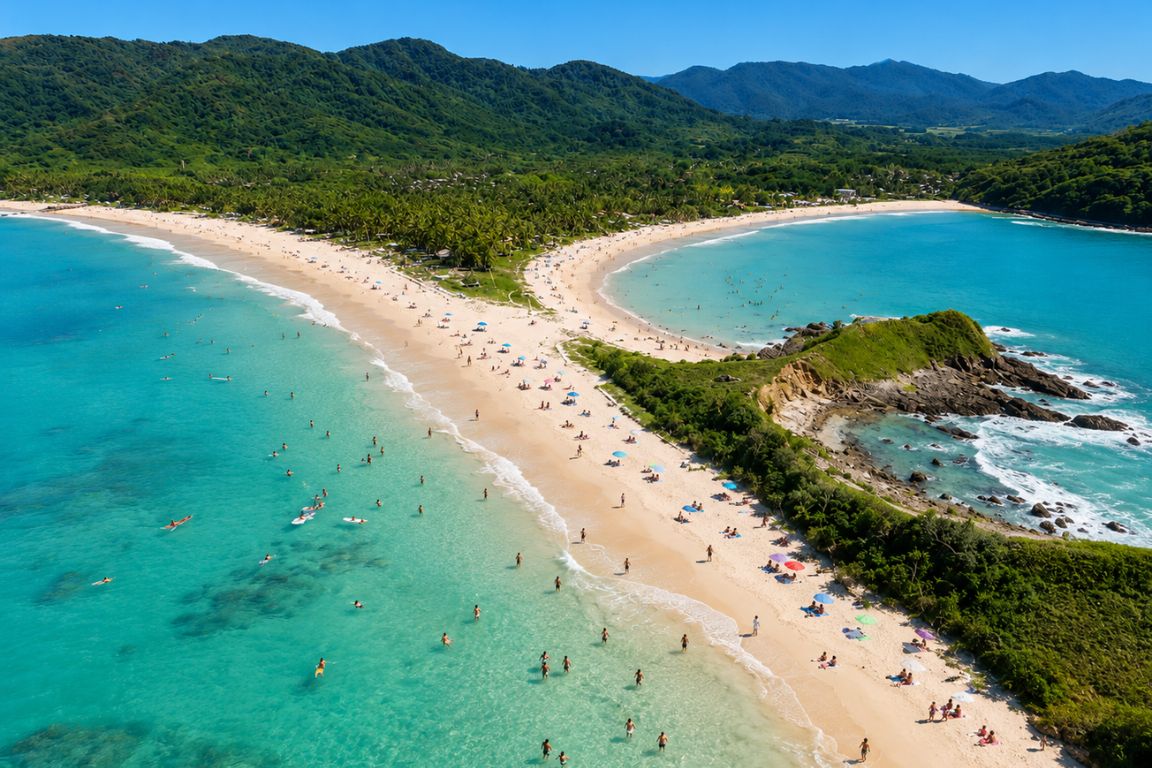
Tour D is the quietest and most relaxed island hopping route in El Nido, offering calmer lagoons, uncrowded beaches, and some of the most peaceful scenery in the Bacuit Archipelago.
Keep the guide’s route advice in mind, then compare the exact shared and private options after the complete article and answers. Compare Your El Nido Options Below.
Last updated: July 29, 2026
Tour D is El Nido’s quietest island hopping route, covering Small Lagoon, Cadlao Lagoon, Nat Nat Beach, Paradise Beach, Pasandigan Cove, and Bukal Island. It operates closest to El Nido town, carries the fewest boats of any standard tour, and delivers beaches that travelers who’ve done all four routes consistently describe as among the least crowded and most beautiful they visited. Group tours cost PHP 1,200 per person. Small Lagoon charges a PHP 200 entry fee and kayak rental runs PHP 150. Tour D is best as a third or fourth day after Tours A and C.
| Stops | Small Lagoon, Cadlao Lagoon, Nat Nat Beach, Paradise Beach, Pasandigan Cove, Bukal Island |
| Duration | 9am to approx. 4pm (7 hours) |
| Group tour price | PHP 1,200 per person - Prices verified June 2026 |
| Private boat price | PHP 7,000 to 9,000 total - Prices verified June 2026 |
| ETDF (eco fee) | PHP 400 one-time, valid 10 days - Prices verified June 2026 |
| Small Lagoon entry fee | PHP 200 per person - Prices verified June 2026 |
| Kayak rental (Small Lagoon) | PHP 150 to 300 per kayak - Prices verified June 2026 |
| What’s included | Bangka boat, licensed guide, life vest, grilled seafood lunch, snorkel gear (basic) |
| Crowd level | Low - consistently the least crowded of the four standard tours |
| Best for | Repeat visitors, anyone wanting quiet beaches, travelers on day 3 or 4 of stay |
- Tour D includes Small Lagoon and Cadlao Island beaches.
- Big Lagoon is a separate Tour A day in the verified shortlist.
- Check kayak charges and eligibility; this boat tour is not an automatically suitable choice for every family.
What Is El Nido Tour D?
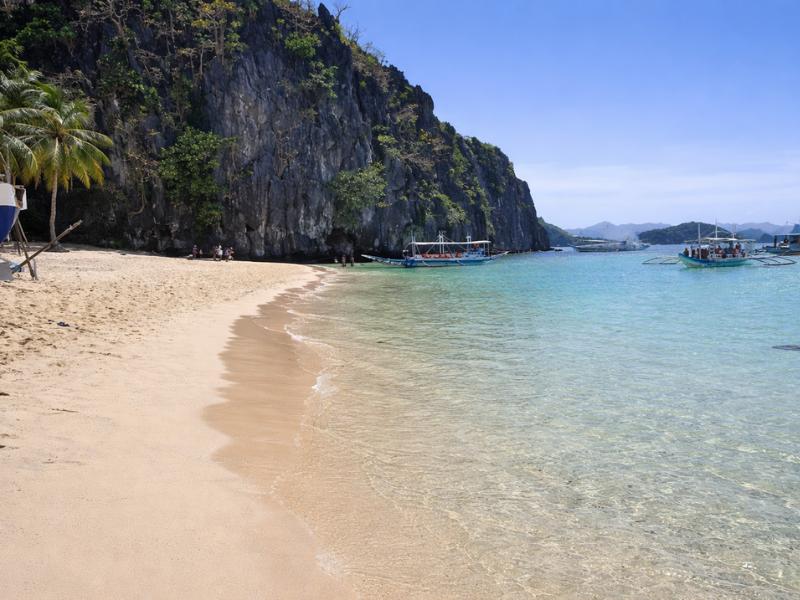
Tour D is the inner bay route of El Nido’s four standard island hopping tours, covering the lagoons and beaches of Cadlao Island and the Miniloc area in Bacuit Bay closest to town. It is consistently the least crowded of the four routes, draws the fewest group tour boats to each site, and covers destinations that travelers who’ve done all four tours routinely nominate as their most peaceful and most beautiful day on the water. The Small Lagoon on Tour D was formerly part of Tour A until crowds drove a regulatory split between the two lagoons.
Tour D has an image problem it doesn’t deserve. In the standard hierarchy travelers build when researching El Nido, it gets slotted as the fourth-best tour, the one you do if you have time after the others. That ordering isn’t wrong exactly, but it misses something: Tour D doesn’t compete with Tours A and C on spectacle. It operates in a different register entirely.
The best description we’ve heard from one of our own guides: “Tour D is the tour you do when you’ve finished chasing.”
That catches something real. After the Big Lagoon’s enclosed grandeur, Secret Beach’s physical challenge, Snake Island‘s tidal drama, Tour D arrives at its Cadlao Island beaches like a long exhale. The beaches have cliffs on both sides and almost nobody on them. The lagoons are calmer and less trafficked than anything on the other routes. The lunch stop often happens on an unnamed stretch of sand where the boat crew sets up under a shade tree and there are no other boats in sight.
Tour D is not a consolation prize. It is the version of El Nido that most travelers never find because they leave before day four. If you have the time, add Tour D as a later day rather than leaving the Cadlao route until you see whether time remains.
What Are The Stops On Tour D?
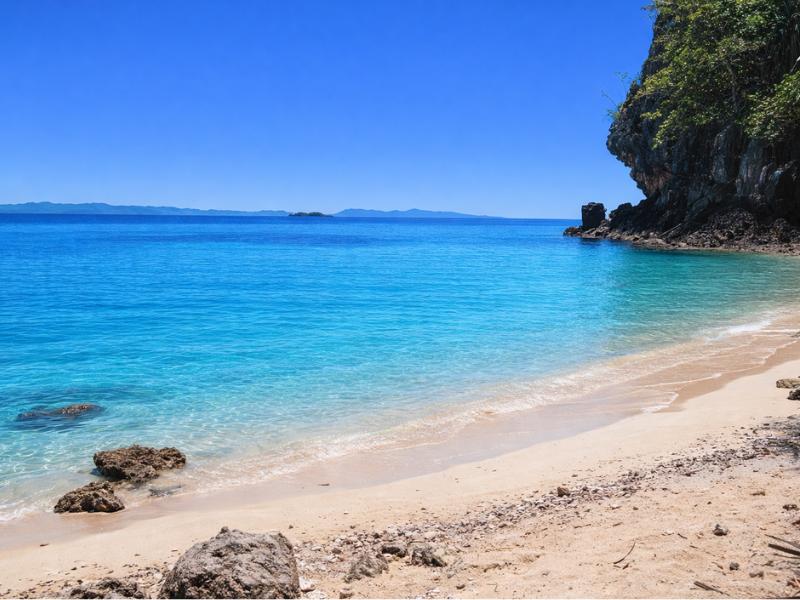
Tour D covers six main stops: Small Lagoon (kayak entry, requires PHP 200 fee), Cadlao Lagoon (no additional entry fee, kayak optional), Nat Nat Beach, Paradise Beach, Pasandigan Cove, and Bukal Island. All stops are on or near Cadlao Island, the largest island in the Bacuit Archipelago, and the Miniloc area. The entire route operates closer to El Nido town than Tours B and C, making it the most accessible by boat and the first to get going on any given morning.
The sequence on Tour D varies by guide and conditions, but a typical well-run day looks something like this:
- 8:00 to 8:30am: Meet at the operator’s office near El Nido Beach. Safety briefing. Boat departs.
- ~9:00am: Small Lagoon. Entry fee (PHP 200) and kayak rental (PHP 150 to 300) paid at the entrance. 45 to 60 minutes inside.
- ~10:00 to 10:30am: Cadlao Lagoon. Kayak rental optional here. 45 minutes exploring the lagoon and shoreline.
- ~11:30am: Nat Nat Beach. Swim, snorkel, explore. Often the lunch stop on operators who serve beach meals.
- ~12:30pm: Paradise Beach or Pasandigan Cove. The two are close together on the south and west face of Cadlao Island.
- ~2:00pm: Bukal Island. The quietest stop on the route. Final swim and relax before return.
- ~3:30 to 4:00pm: Return to El Nido pier.
The proximity of Cadlao Island to town means Tour D (book group tour Explore Tour D: Small Lagoon And Cadlao or private tour Tour D Shared/Private Options) can depart and return on a slightly tighter timeline than Tours C or B. The extra flexibility this creates, a later departure or an earlier return, makes Tour D more practical as the final tour in a multi-day itinerary. The boat crew can push the return to 4pm without the frantic late-afternoon run back from the outer islands that Tour C sometimes requires.
One important regulatory note: Small Lagoon was formerly part of Tour A‘s itinerary. The Department of Environment and Natural Resources split the Big Lagoon and Small Lagoon across different tours to reduce overcrowding at both sites. Big Lagoon belongs to Tour A. Small Lagoon belongs to Tour D. This means if you want to kayak both iconic Miniloc lagoons, you need to do both Tour A and Tour D.
Tour A is El Nido’s flagship route for a reason but it’s also the most crowded - our El Nido Tour A guide breaks down what to expect at each stop, how to avoid the worst of the crowds, and whether the lagoons live up to the photos.
What Is The Small Lagoon Like?
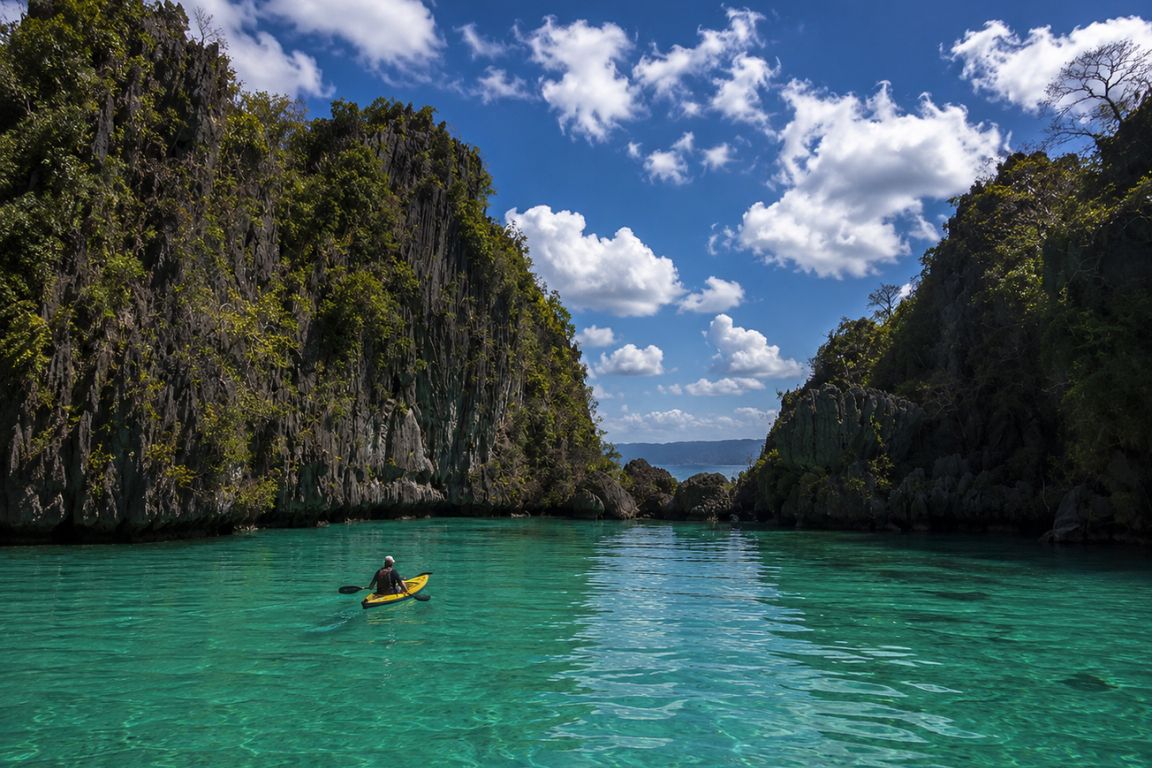 The Small Lagoon is a compact, enclosed body of water on Miniloc Island, accessed through a narrow opening in the limestone face and explored by kayak. The PHP 200 entry fee and kayak rental (PHP 150 to 300) apply here as they do at the Big Lagoon on Tour A. Smaller than the Big Lagoon in scale but more intimate, the Small Lagoon wraps tighter walls around a shallower body of emerald water. Several mini caves open off the main lagoon into short chambers that are worth paddling into. The coral outside the lagoon entrance, near the boat anchorage, is better for snorkeling than the lagoon itself.
The relationship between the Small Lagoon and the Big Lagoon confuses many travelers who expect a simple hierarchy: one bigger, one smaller, the bigger one better. It is more nuanced than that. The Big Lagoon impresses through scale: a wide body of water you paddle across while limestone towers rise around you. The Small Lagoon works differently. The walls are closer. The water shifts more noticeably in color as it gets shallower toward the back. The mini caves that branch off to the sides give it a maze-like quality that the more open Big Lagoon doesn’t have.
The key difference for the kayak experience: at the Small Lagoon, you can paddle the entire perimeter in 20 to 30 minutes without feeling like you’ve rushed it. The scale is human-proportioned in a way the Big Lagoon isn’t. Some travelers prefer it for exactly this reason. Others find it claustrophobic. Both reactions are reasonable responses to the same place.
Practically: the kayak rental is required to enter properly, as boats are not permitted through the entrance channel. The entry channel is shallow enough at low tide that the kayak has to be dragged or walked through in parts. This is normal and adds rather than detracts from the experience. The guide will help. The snorkeling directly outside the entrance, rather than inside the lagoon itself, is where the reef quality concentrates. Spend the last few minutes before returning to the boat mask-down on the outside reef rather than inside the lagoon.
What Is Cadlao Lagoon Like?
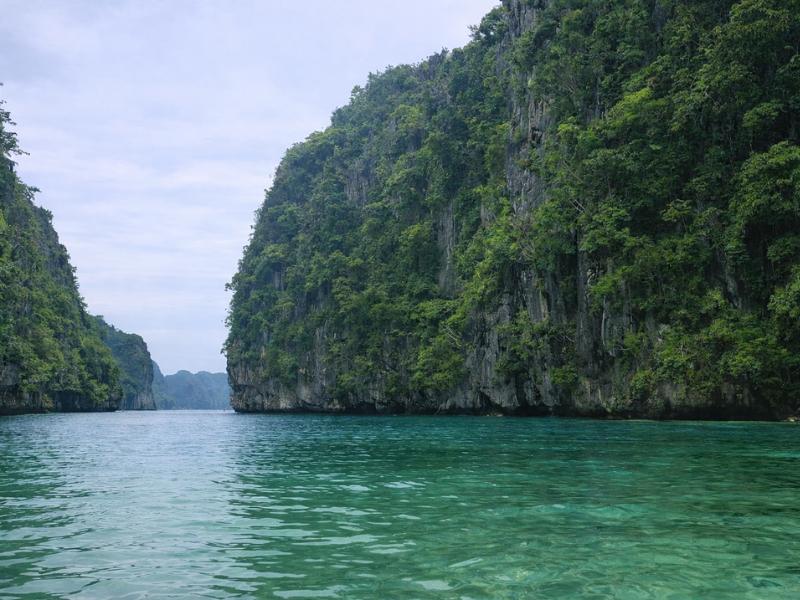
Cadlao Lagoon sits on the western face of Cadlao Island, El Nido’s largest island, and offers a different experience from the Miniloc lagoons on Tours A and D. The entry here is open, no narrow channel required, and the lagoon is wide enough for kayaking in relaxed circles. The color is a striking emerald that deepens toward the center. Small unnamed beaches dot the interior where you can dock a kayak and sit in genuine solitude. The best snorkeling is outside the lagoon entrance rather than inside.
Cadlao Island deserves more credit than it gets in most El Nido itineraries. At 37 square kilometres it is the largest island in the Bacuit Archipelago, and the lagoon on its western coast is the kind of place that travelers who specifically go looking for it tend to describe as a revelation. It doesn’t appear in the headline imagery of El Nido the way Big Lagoon or Secret Beach does. It requires knowing it’s there and specifically choosing Tour D to find it.
The lagoon itself is broader and more open than the Miniloc lagoons. You don’t kayak through a narrow channel to enter it; the boat anchors off the wide entrance and you paddle in freely. The walls around it are lower than those of the enclosed lagoons on other tours, which means more sky and a different quality of light. The color of the water ranges from a pale turquoise at the edges to a deeper emerald toward the center where the depth increases.
Several tiny pocket beaches line the interior of the lagoon. Most are unnamed and none are developed. Paddling to one of these beaches, dragging the kayak up above the waterline, and sitting for ten minutes with no other people nearby is the kind of moment Tour D delivers that none of the other tours quite replicate at this scale. The outside reef, between the lagoon entrance and the main boat anchorage area, has consistent coral quality and occasional sea turtle sightings. The best snorkeling time at Cadlao Lagoon is during the approach or departure, not inside the lagoon itself.
What Are Nat Nat Beach, Paradise Beach, And Pasandigan Cove Like?
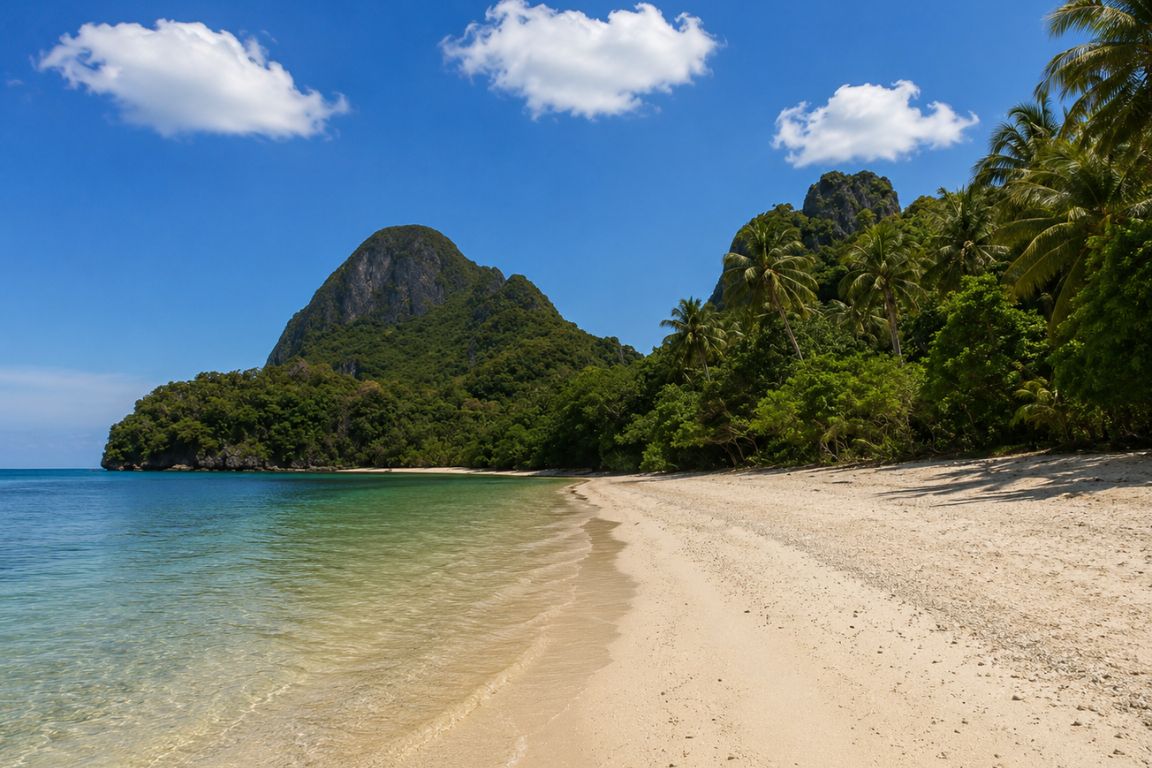 Nat Nat Beach, Paradise Beach, and Pasandigan Cove are three beaches on Cadlao Island’s southern and western coast that define Tour D‘s second half. All three have cliffs on at least one side, white sand, and calm shallow water. None have vendors or facilities beyond what the tour boat crew sets up for lunch. They are consistently among the least crowded beaches visited on any standard island hopping tour, and travelers who’ve done all four routes frequently nominate them as the most beautiful beaches of their El Nido trip.
This is the part of Tour D that takes most travelers completely by surprise. By the time the boat anchors at Nat Nat Beach, travelers who have done Tours A and C carry mental images from those routes. The Big Lagoon’s scale. Secret Beach’s drama. What they find at Nat Nat is less immediately cinematic but more immediately inhabitable: a long sweep of pale sand with no infrastructure, limestone rising on both ends of the bay, water clear and calm enough that you can see the sand bottom in the shallows, and no sound beyond the sea and the wind and whatever the guide is saying about the fish.
Paradise Beach earns its name more quietly than the marketing suggests. It isn’t a superlative beach in the sense that Seven Commandos Beach is a superlative beach, with coconut palms and a bar and a volleyball net. It is a beach where the setting around it, cliffs, water, sky, and the near-total absence of other people, creates a quality of stillness that more developed beaches can’t manufacture.
Pasandigan Cove adds limestone walls close on both sides, creating a narrower bay that concentrates the scenery. The water here is typically shallow enough for non-swimmers to wade around comfortably. The coral reef along the cove’s southern wall is accessible by snorkeling from the beach without swimming out more than 20 metres.
Bukal Island completes the day as the quietest of all Tour D‘s stops, a small island with crystal-clear water and a single beach where the crew usually finishes the afternoon. Most groups spend 30 to 45 minutes here: a final swim, a cold drink from the boat cooler, and the slow return to town.
How Does Tour D Compare To The Other Tours?
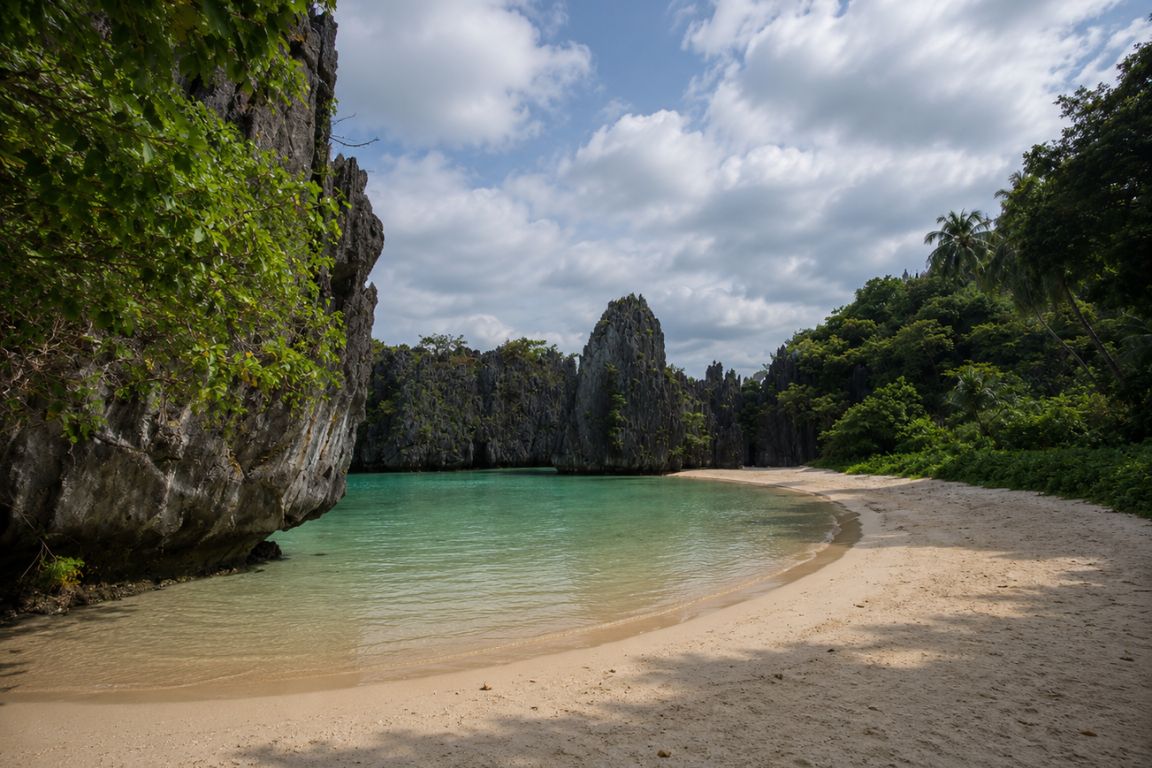
Tour D is the quietest and most relaxed of the four standard El Nido island hopping routes. It doesn’t have Tour A‘s enclosed lagoon drama, Tour C‘s physical beach entries, or Tour B‘s archaeological depth. What it has is low crowd density, beaches where you can actually hear the water, and two lagoon experiences in the same day. Most travelers do Tour D third or fourth rather than first, and this sequencing works well: Tour D functions as a restoration day after the more intensive tours.
| Crowd level | Lowest of the four tours | Tour A and C significantly busier at flagship stops |
| Physical demands | Kayaking, light swimming | Less demanding than Tour C (no swim-throughs) |
| Beach quality | Excellent, consistently uncrowded | Less dramatic than Tour C but more accessible and quieter |
| Lagoon experience | Two lagoons (Small + Cadlao) | Tour A has Big Lagoon only; Tour D has a different but complementary pair |
| Distance from town | Closest of the four routes | Shorter boat transit; more time at stops relative to transit |
| Extra fees | PHP 200 Small Lagoon + PHP 150 kayak | Same as Tour A; lower than Tour C if shrine entry skipped |
| Best day to do it | Day 3 or 4 of stay | Tour A day 1 or 2, Tour C day 2 or 3, Tour D last |
The one traveler who consistently picks Tour D first is the one who specifically doesn’t want the crowds and knows exactly why. For a traveler arriving in El Nido with experience of other Philippine islands and a specific preference for quieter sites over iconic ones, Tour D on day one makes sense. For everyone else, it works best as the finale.
There is a practical advantage to Tour D‘s proximity to town that rarely gets mentioned: if the weather turns mid-day, Tour D is the easiest to cut short and return from safely. The outer island tours, particularly Tour C, involve genuinely long boat rides back in rough conditions. Tour D‘s shorter distances mean less exposure. For families with young children, travelers prone to seasickness, or anyone visiting during shoulder season when weather is less predictable, Tour D‘s geography is a genuine practical benefit beyond the crowd advantages.
We’ve put together a full route comparison in our Tour A vs B vs C vs D guide so you know exactly which combination of tours gives you the most complete El Nido experience for your available days.
How Do You Book Tour D And What Does It Cost?
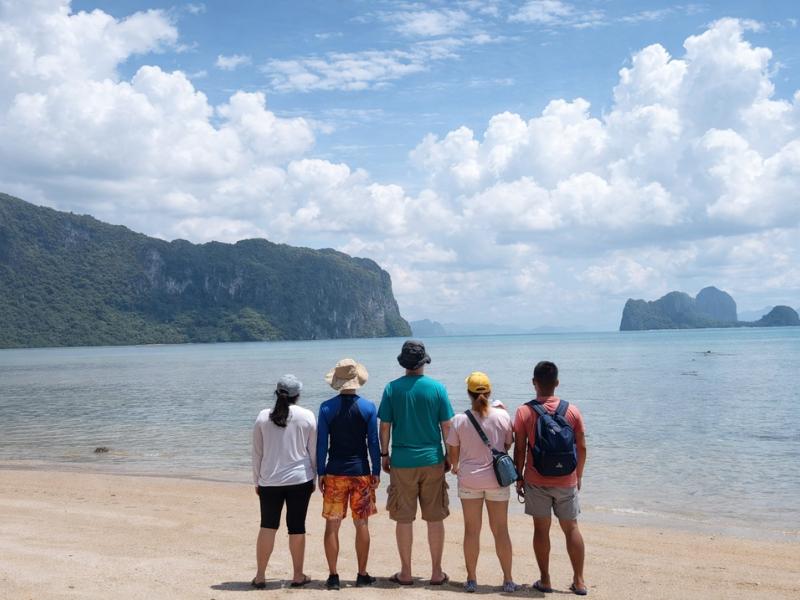
Group Tour D costs PHP 1,200 per person, the same as Tour A, and can be booked through tour operators in El Nido town, at your accommodation, or online. The ETDF eco fee (PHP 400) is paid separately. Small Lagoon charges PHP 200 entry and PHP 150 to 300 kayak rental on site. There are no other site-specific fees. Tour D is the easiest of the four tours to book on short notice, even in peak season, because it draws fewer travelers and fills boats more slowly.
| Group tour (per person) | PHP 1,200 | Example only; confirm the selected operator’s current quote |
| ETDF (eco fee) | PHP 400 | One-time, valid 10 days, all tours |
| Small Lagoon entry fee | PHP 200 | Per person, paid at lagoon entrance |
| Kayak rental (Small Lagoon) | PHP 150 to 300 | Per kayak (fits 2); strongly recommended |
| Kayak rental (Cadlao Lagoon) | PHP 150 to 300 | Optional; no entry fee for Cadlao Lagoon itself |
| Snorkel mask rental | PHP 100 to 150 | Optional; bring your own for better fit |
| Private boat (total) | PHP 7,000 to 9,000 | For the whole boat; per-person cost drops with group size |
All prices verified June 2026 against El Nido Municipal Tourism Office records and operator price lists.
The morning-of booking situation is the most favorable of any El Nido tour for Tour D. Where Tour A (book group tour Explore Tour A: Big Lagoon And Island Beaches or private tour Explore Private Tour A With Lunch) in peak season genuinely benefits from advance booking to secure a morning slot, Tour D can often be booked the day before or the morning of without any problem. The boats fill more slowly, the operators have availability further into the week, and the overall demand is lower than Tours A and C.
Some operators offer a combined B and D route that hits Tour B‘s caves and sandbar alongside Tour D‘s quieter lagoons in one extended day. This is physically demanding but covers more of the inner archipelago’s less-visited areas than any single standard tour. If you’re on a 3 or 4 day visit and want maximum coverage without repeating zones, this combination works. Ask at booking whether your operator offers it. If a single combined day is too long, a separate Tour B and Tour D cover the same areas at a lighter pace.
Wondering which tour operators keep group sizes small, provide decent snorkeling gear, and actually spend enough time at each stop? This best El Nido island hopping tours guide covers what the booking platforms don’t tell you upfront.
What Should You Know Before Doing Tour D?
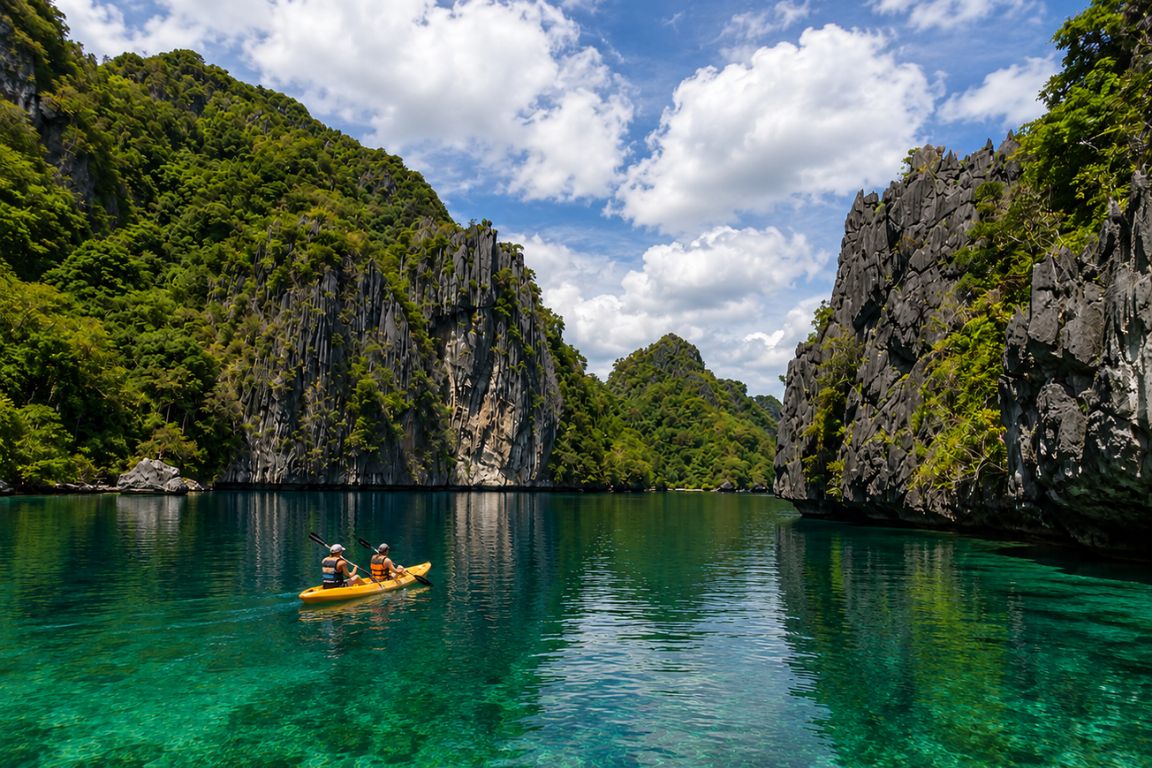 The most important things to know before Tour D: kayak at both the Small Lagoon and Cadlao Lagoon if you can, the best snorkeling at each lagoon is outside the entrance rather than inside, the Cadlao Island beaches are genuinely among the best in El Nido, and Tour D works best as a deliberate choice rather than a default. Travelers who arrive knowing why they chose Tour D leave satisfied. Travelers who arrive expecting it to be Tour A with fewer people sometimes feel underwhelmed.
Here is what matters on the day from the perspective of guides who have run this route for years:
Kayak at both lagoons. The Small Lagoon kayak entry fee (PHP 200) and rental (PHP 150 to 300) are both well worth paying. Cadlao Lagoon has no entry fee and kayak rental is optional, but the interior of the lagoon, including the pocket beaches and the far walls, is only accessible by kayak. Do both. The day’s entire character is defined by these two kayak experiences.
Snorkel outside the lagoons, not inside. This applies to both the Small Lagoon and Cadlao Lagoon. The reef quality concentrates near the entrance channels and around the boat anchorage areas, where water circulation is stronger and coral growth is healthier. The lagoon interiors are beautiful for kayaking but don’t have the marine life density of the outside reef. Ask your guide where the best snorkel spot is before jumping in and you’ll almost always be directed outside the lagoon entrance.
The Cadlao Island beaches are the surprise of the day. Most Tour D travelers arrive expecting the lagoons to be the highlights and the beaches to be supporting characters. Then Nat Nat and Paradise Beach happen. Multiple travelers who’ve done all four tours have told us afterward that the afternoon beach stops on Tour D were the most beautiful beaches they visited across their entire El Nido trip. Go in expecting to be surprised by the second half of the day.
Tour D is the closest tour to home base. This matters for one practical reason: if sea conditions deteriorate during the day, Tour D‘s shorter return journey to town means the guide has more flexibility to extend stops or wait out a weather window at a beach. It also means the day has a more relaxed pace overall, with less boat transit time relative to time at stops than Tours B or C.
Tour D Insights From Our 8,200+ Guided Travelers
| Travelers who did Tour D | 29% of all El Nido Tours clients |
| Most common day Tour D was done | Day 4 or 5 of the stay (71%) |
| Travelers who rated Tour D higher than expected | 68% |
| Most cited highlight of Tour D | Cadlao Lagoon (48%), Paradise Beach or Nat Nat Beach (39%) |
| Most common preparation mistake | Skipping kayak at Cadlao Lagoon (52%), insufficient cash for Small Lagoon fees (31%) |
| Travelers who nominated Cadlao Island beaches as their favorite of the trip | 34% |
| Crowd comparison to Tour A (traveler self-reported) | Tour D felt “significantly less crowded” for 88% of those who did both |
Frequently Asked Questions
What is the difference between the Small Lagoon and the Big Lagoon?
The Big Lagoon (Tour A) is wider and more open, with a long kayak approach through a channel that opens into a broad body of water with towering walls. The Small Lagoon (Tour D) is more compact and intimate, with tighter walls, shallower water, and mini caves branching off the main body. Both require the PHP 200 entry fee and kayak rental. Neither is objectively better; they deliver different experiences and both are worth doing if you have the days for both tours.
Is Tour D worth doing if you’ve already done Tours A and C?
Yes, specifically because it covers completely different destinations. The Cadlao Island beaches are not accessible on any other standard tour route and consistently surprise travelers with their quality and quietness. The Cadlao Lagoon experience is different from the Miniloc lagoons. If you have the days, Tour D as a fourth day gives you a version of El Nido that the other tours don’t offer.
Can you do Tour A and Tour D to see both lagoons?
Yes, this is exactly how the two lagoons are designed to be visited. The DENR split the Big Lagoon and Small Lagoon across different tours to reduce crowding at both sites. Tour A covers Big Lagoon, Tour D covers Small Lagoon. Doing both tours on different days gives you kayak access to both Miniloc lagoons across your El Nido visit.
Is Tour D good for families with children?
Tour D may appeal to families who want the Cadlao lagoon-and-beach route, but individual suitability needs confirmation. Ask about each child’s age, swimming confidence and life-jacket size. The verified listing excludes pregnant travelers, wheelchair users and people with mobility impairments; calm-looking beach photos do not establish eligibility.
Why did the Small Lagoon move from Tour A to Tour D?
The DENR moved the Small Lagoon from Tour A’s itinerary to Tour D’s as part of efforts to reduce overcrowding at Miniloc Island’s two main lagoons. When both lagoons were on Tour A, the combination drew too many boats to the same zone simultaneously. Splitting them across two different tours spreads the visitor load and gives both lagoons a better experience. The Small Lagoon is now Tour D’s lagoon highlight, and it’s consistently less crowded than the Big Lagoon as a result.
Does Tour D have the best beaches in El Nido?
That’s a question our guides get asked often after travelers return from the Cadlao Island beaches. The honest answer is that Nat Nat Beach and Paradise Beach are genuinely excellent, consistently uncrowded, and frequently nominated by travelers who’ve done all four tours as the most beautiful beaches of their stay. They lack the dramatic rock entry of Tour C’s beaches and the iconic coconut-line of Seven Commandos, but in terms of raw beauty combined with solitude, the Cadlao Island beaches on Tour D have a strong case.
Ready to book Tour D, or trying to figure out which tours fit your days?For the usual sequence, read the Tour A guide first, then keep Tour D for a later day. Start at elnido.tours. Written by Ethan Reyes
Philippine tour guide since 2014 · Founder, El Nido Tours
Ethan has guided over 8,200 travelers through El Nido, the Bacuit Archipelago, and Palawan since founding the agency.