El Nido Tour B Guide
Tour B is El Nido’s quietest and most overlooked island hopping route, combining caves, sandbars, and uncrowded beaches with far fewer boats than Tours A or C.
Keep the guide’s route advice in mind, then compare the exact shared and private options after the complete article and answers. Compare Your El Nido Options Below.
Last updated: July 29, 2026
Tour B is El Nido’s most underrated island hopping route, covering Snake Island’s tidal sandbar, Cudugnon Cave (a Neolithic archaeological site with artifacts dating to the Sung Dynasty), Cathedral Cave, Entalula Beach, and Pinagbuyutan Island. It runs 9am to 4pm, costs PHP 1,200 per person for a group tour, and carries significantly fewer boats than Tours A and C. No extra lagoon fees apply. Tour B is the right choice for anyone who wants quieter sites, caves with real historical depth, and a more relaxed day on the water.
| Stops | Snake Island, Cudugnon Cave, Cathedral Cave, Entalula Beach, Pinagbuyutan Island |
| Duration | 9am to approx. 4pm (7 hours) |
| Group tour price | PHP 1,200 to 1,300 per person - Prices verified June 2026 |
| Private boat price | PHP 7,000 to 9,000 total - Prices verified June 2026 |
| ETDF (eco fee) | PHP 400 one-time, valid 10 days - Prices verified June 2026 |
| Cudugnon Cave entrance fee | PHP 150 per person (privatized, paid on site) - Prices verified June 2026 |
| Lagoon fees | None - Tour B has no lagoon entry fees |
| What’s included | Bangka boat, licensed guide, life vest, grilled seafood lunch, snorkel gear (basic) |
| Crowd level | Low - significantly quieter than Tours A and C |
| Best for | History enthusiasts, cave explorers, crowd-avoiders, repeat visitors, day 3 or 4 |
- Tour B adds Snake Island, caves and beaches to an El Nido stay.
- The verified group route lists Entalula; the private itinerary lists different beach stops.
- Confirm tides and cave-entry needs with your operator, and include extras in your total quote.
What Is El Nido Tour B?
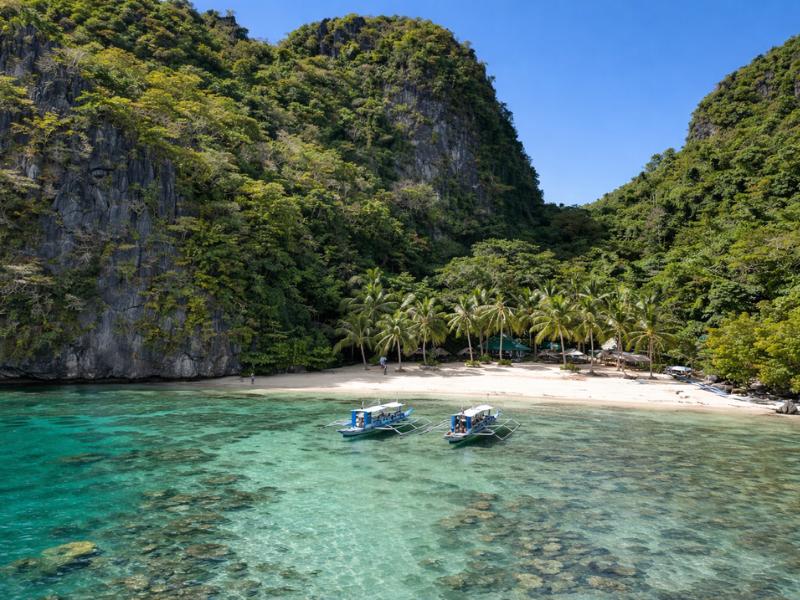
Tour B is the caves and sandbars route of El Nido’s four standard island hopping tours, covering Snake Island, Cudugnon Cave, Cathedral Cave, Entalula Beach, and Pinagbuyutan Island. It is consistently the least crowded of the four tours, draws the fewest boats to each site, and offers a character that Tours A and C don’t: a mix of geological spectacle, genuine archaeological history, and beaches with actual breathing room. Most travelers who do Tour B come back saying it surprised them more than they expected.
Tour B’s caves and tidal sandbar give it a different appeal from the headline lagoons and hidden beaches of Tours A and C. Choose it because those stops interest you, and check the exact date and itinerary rather than assuming smaller groups or last-minute availability.
Those travelers almost always rate it more highly than they anticipated.
Snake Island’s sandbar, visible only at low tide, is one of the genuinely unusual natural formations in the entire archipelago. Cudugnon Cave holds artifacts from the Sung Dynasty, pottery and jewelry excavated from a chamber used as a burial site by ancient settlers from Borneo who crossed a land bridge to Palawan centuries before the Philippines existed as a concept. Cathedral Cave has scale that takes a moment to absorb. And Entalula Beach, which ranked second on the World’s 50 Best Beaches list in 2025, delivers white sand and clear water with a fraction of the foot traffic that the Tour A sites collect on any given peak season morning.
Tour B is a different kind of day. We've been running Tour B since 2014 and it is one of our guides' favorites precisely because the sites reward curiosity rather than just presence. If you want to know which tours make sense for your specific days in El Nido, start with the Tour A guide and then compare it with this route.
Trying to figure out what actually separates the four El Nido tour routes beyond the brochure descriptions? Check out our Tour A vs B vs C vs D guide before you commit to anything.
What Are The Stops On Tour B?
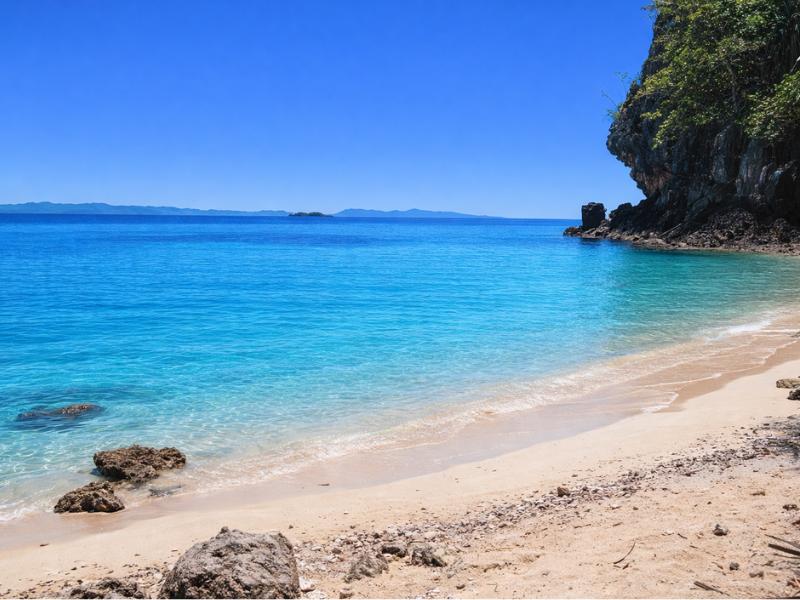
Tour B covers five main stops: Snake Island (the S-shaped tidal sandbar), Cudugnon Cave (archaeological site with Sung Dynasty artifacts), Cathedral Cave (dramatic limestone sea cave), Entalula Beach (pristine white sand, excellent snorkeling), and Pinagbuyutan Island (semi-circular beach beneath sheer limestone walls). The route order varies by guide and conditions. No lagoon entry fees apply on Tour B, making the total cost per person lower than Tour A.
A typical Tour B sequence runs like this:
- 8:00 to 8:30am: Meet at the operator’s booking office near El Nido Beach. Safety briefing and life vests. Boat departs.
- ~9:00am: Snake Island. The sandbar’s visibility depends on tide. Guides check the tide chart and schedule the arrival for low tide when possible. 45 to 60 minutes here.
- ~10:00 to 11:00am: Cudugnon Cave. The boat anchors off the beach near the cave entrance. The entry requires crawling through a narrow rock opening. The guide leads the group through the chambers and provides historical context.
- ~11:30am: Cathedral Cave. A shorter stop, 15 to 30 minutes, to appreciate the scale of the cavern walls before heading to lunch.
- ~12:00pm: Entalula Beach. Lunch stop. Grilled fish, rice, and fruit. The snorkeling off the far end of the beach is worth the swim.
- ~1:30 to 2:30pm: Pinagbuyutan Island. Beach time, snorkeling, photos against the limestone walls.
- ~3:30 to 4:00pm: Return to El Nido pier.
Some operators include Papaya Beach as an alternative to or addition to Entalula Beach. Papaya Beach is quieter, with calmer water and a shallow reef suitable for beginner snorkelers. If you have a preference, ask at booking which stops your specific operator includes.
One important recent update: Cudugnon Cave has been privatized and now charges a PHP 150 per person entrance fee paid on site, separate from the tour cost. This is a relatively new development and not all online booking listings reflect it yet. Budget for it regardless.
What Is Snake Island Like?
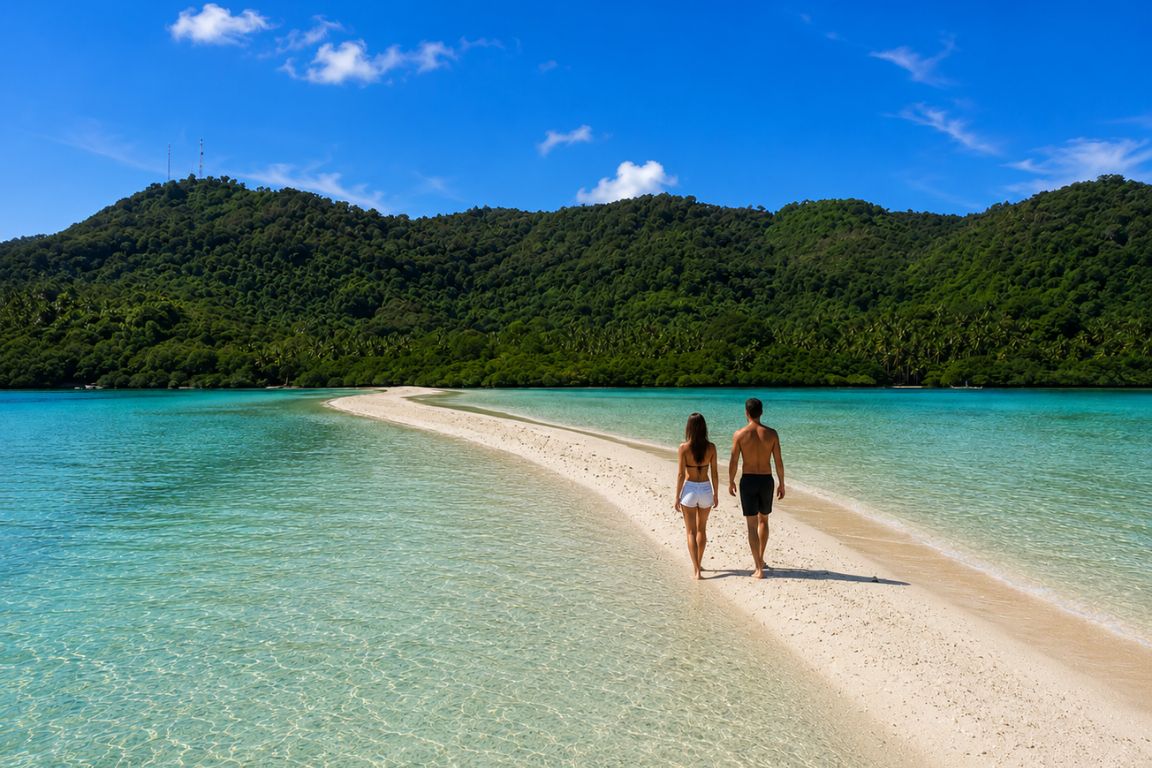
Snake Island, officially Vigan Island, is known for its natural S-shaped sandbar that connects the island to the mainland at low tide. The sandbar stretches into the turquoise water like a pale stripe between two bodies of sea, walkable when the tide is out and knee-deep when it isn’t. From the elevated viewpoint at the island’s crest, the full serpentine shape becomes visible. It is one of the most photographed natural formations in El Nido and genuinely unlike anything else in the archipelago.
The sandbar is tidal, which is the first thing to understand about this stop. At low tide, the full S-shape emerges from the water and you can walk along it with open sea on both sides, the water barely ankle-deep at the edges. Starfish cluster in the shallows. The pale sand underfoot contrasts with the turquoise on both sides. At high tide, the sandbar disappears beneath about two feet of water and the visual effect is entirely different. A good guide checks the tide table and builds the stop around low tide wherever possible. When it works as planned, Snake Island is the kind of place that makes travelers stop talking mid-sentence.
The viewpoint trail is worth the climb. A short, steep path leads up from the beach to an elevated point with an unobstructed view across the sandbar and back toward the limestone islands. This is where the drone footage and the wide-angle photos come from. The hike takes about 10 minutes each way on a clear path with some loose rock toward the top. It’s accessible to most fitness levels and pays off.
The surrounding water is also worth snorkeling. Reef fish congregate in the shallows around the sandbar, and the coral in the slightly deeper water off the far side of the island is healthy. Unlike the crowded snorkel sites on Tour A, you’ll often have the water to yourself or close to it.
One practical note: the sandbar offers almost no shade. Sun protection and a hat matter more here than at any other stop on Tour B. The white sand reflects heat upward as well as light, and 45 minutes on the sandbar at midday in peak season is a significant sun exposure.
What Are Cudugnon Cave And Cathedral Cave Like?
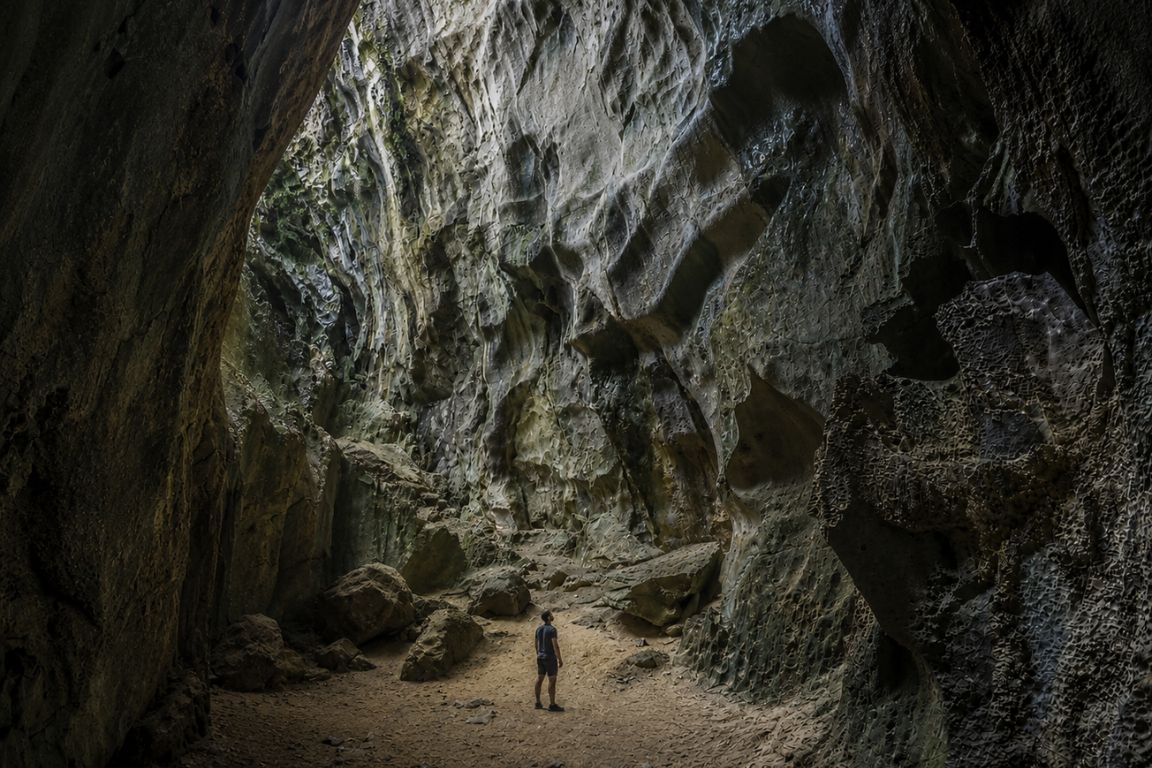 Cudugnon Cave is one of the most significant archaeological sites in the Philippines, a Neolithic burial chamber where excavations uncovered pottery, jewelry, and human remains linked to Sung Dynasty trade networks (960 to 1279 AD) and early settlers who crossed an ancient land bridge from Borneo. The cave is accessed through a narrow rock opening that requires crouching or crawling. Cathedral Cave is a larger adjacent sea cave with dramatic chamber walls that open to a shaft of natural light, accessible by swimming or kayaking to its entrance.
Cudugnon Cave looks modest from the outside. A small beach, a limestone cliff face, a dark gap in the rock at foot level. You crouch down, put one knee in the shallow water, and push through. Inside, the ceiling rises into darkness and three chambers open in sequence, each lit by natural light filtering through gaps in the rock. Bats and barn swallows have nested in the upper recesses for as long as anyone can establish.
What gives the cave its weight is the archaeology. The people who used this space weren’t just sheltering here. Researchers believe they were Neolithic inhabitants connected to Borneo by a now-submerged land bridge, burying their dead with pottery and jewelry that, when dated, traced to Sung Dynasty trade routes in mainland China. The cave floor once held bones. The artifacts are long since moved to museums, but the chamber where they were found is the same one you walk through. During World War II, the cave served as a hiding place for local families fleeing Japanese forces. Some accounts suggest Japanese soldiers used it later, and a rumor of buried treasure has persisted ever since, unverified but persistent.
The tour guide’s role matters enormously at this stop. A guide who knows the history transforms Cudugnon Cave from an atmospheric crawl-through into a genuine encounter with 1,000-plus years of human activity. Ask your guide about the archaeological history before entering. The cave repays curiosity.
Cathedral Cave is the tonal contrast. Where Cudugnon is intimate and historically layered, Cathedral Cave is architecturally spectacular. The limestone walls rise like the interior of a Gothic church, hence the name, and sunlight enters through an opening above at certain times of day, throwing the entire chamber into dramatic relief. Most groups swim or kayak to the entrance and spend 15 to 20 minutes inside. It is primarily a visual experience rather than a historical one, but the scale commands attention.
What Are Entalula Beach And Pinagbuyutan Island Like?
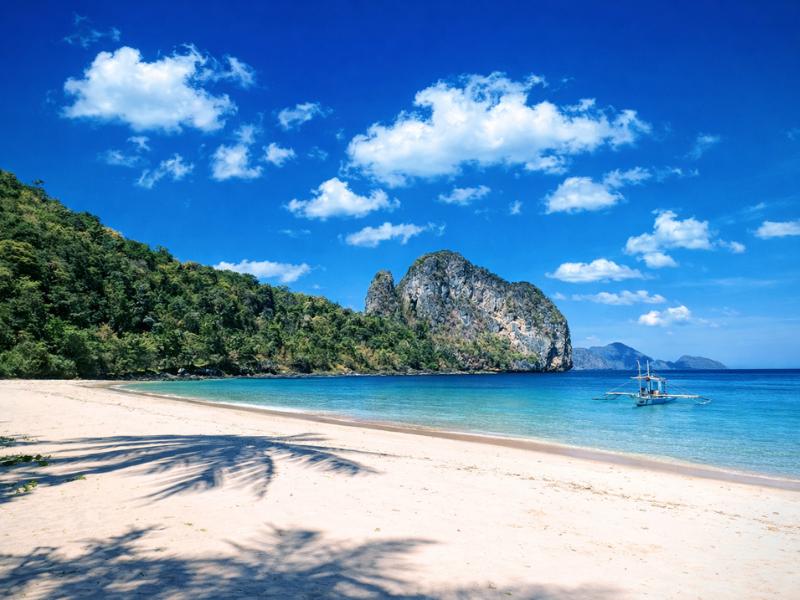
Entalula Beach is a long, pristine white sand beach with limestone cliffs at the far end, clear shallow water along the shore, and snorkeling off the right side of the beach that consistently produces reef fish, corals, and occasional sea turtles. In 2025, World’s 50 Best Beaches ranked it second in the world and first in Asia. Despite that recognition, it remains quieter on most Tour B days than the headline Tour A sites. Pinagbuyutan Island offers a semi-circular beach beneath sheer vertical limestone walls, with strong snorkeling off the side facing Malapacao Island.
Entalula Beach is where Tour B exhales. After the activity of the sandbar and the dark intensity of the caves, the beach delivers exactly what a midday stop should: soft sand, shade from palms, a meal that tastes better in this setting than it would anywhere else, and water clear enough that you can see the reef details from the surface before you put a mask on.
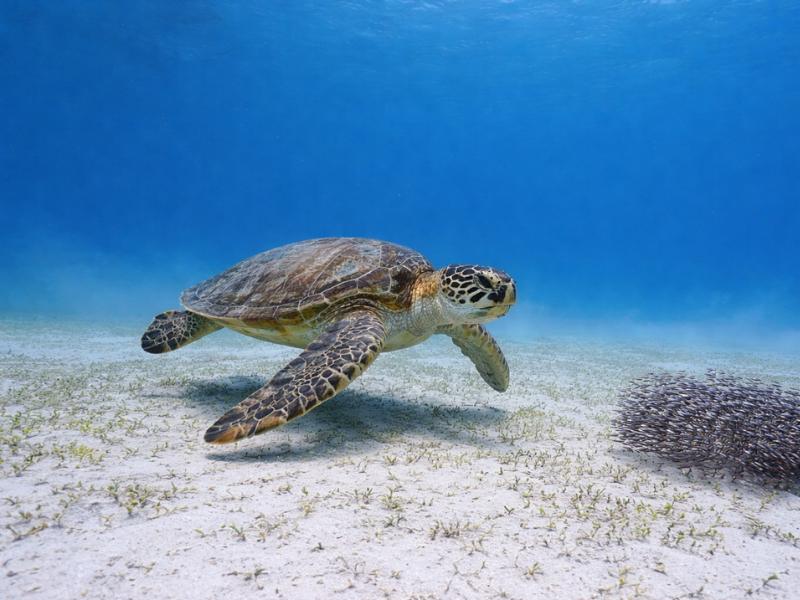
The snorkeling here is among the better coral encounters on any of the four standard tour routes. The right side of the beach, past the point where most groups spread their towels, drops into a reef with consistent fish density and healthy coral cover. Clownfish are common. Sea turtles appear often enough that seeing one doesn’t feel like a lucky accident. The water stays shallow enough for confident waders and deep enough for snorkelers to find something worth seeing.
A note on the beach: part of Entalula Island is private property associated with El Nido Resorts. The main beach area available to tour groups is the adjacent section, which has its own entry point and no facilities beyond what the tour boat crew sets up for lunch. This means there is no beach bar, no equipment rental, and no shade structures beyond the palm trees. Bring your own water and plan accordingly.
Pinagbuyutan Island is the stop that most travelers don’t know about before they arrive. The island is known locally as Ellis Island and consists almost entirely of vertical limestone cliff, dropping to a narrow semi-circular strip of white sand at its base. Standing on that strip and looking upward, the cliff walls frame the sky in a way that doesn’t photograph well but registers physically in person. The snorkeling off the side facing Malapacao Island, away from where most boats anchor, finds healthy reef with considerably less disturbance than the Tour A snorkel sites.
How Does Tour B Compare To Tour A?
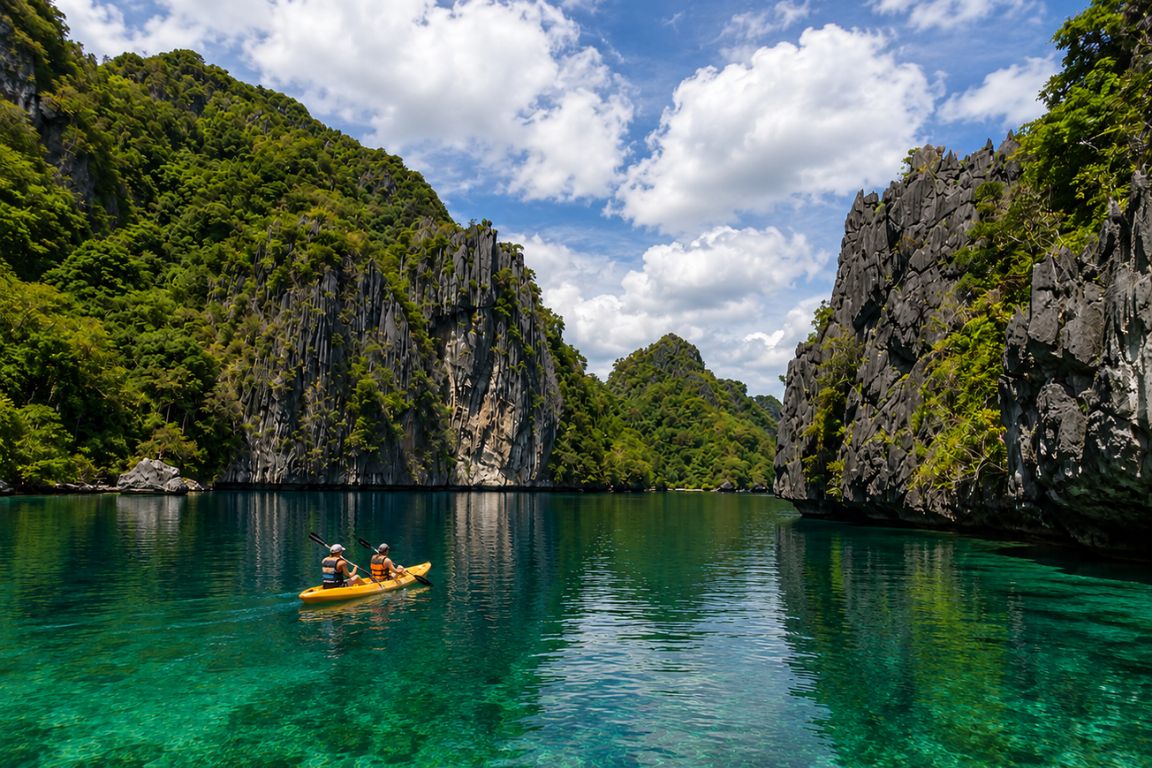
Tour A is the iconic lagoon experience and the right first tour for most visitors. Tour B is the right next choice for anyone who wants caves, geological history, a tidal sandbar, and significantly fewer crowds. The two tours cover completely different parts of the archipelago and don’t share a single destination. Tour B costs roughly the same as Tour A but has no lagoon entry fees, making its total out-of-pocket cost lower. It is less visually dramatic than Tour A but more varied in what it asks of you as a visitor.
The crowd comparison is the starkest practical difference. During peak season, Tour A‘s Big Lagoon can have a dozen boats waiting at the entry channel simultaneously. Tour B‘s Snake Island sandbar, on a busy day, might have three other boats in the bay. The cave stops typically host one group at a time. Entalula Beach, even in January or February, rarely feels overrun. For travelers who found Tour A (book group tour Explore Tour A: Big Lagoon And Island Beaches or private tour Explore Private Tour A With Lunch) more crowded than expected, Tour B operates at a genuinely different human scale.
| Main focus | Lagoons, enclosed water, karst walls | Caves, sandbar, open beaches |
| Crowd level | High (most popular tour) | Low (least popular tour) |
| Extra fees | PHP 200 lagoon fee + PHP 150 kayak rental | PHP 150 Cudugnon Cave entry (no lagoon fees) |
| Physical demands | Kayaking, swimming, some scrambling (Secret Lagoon) | Cave crawl (Cudugnon), sandbar walk, snorkeling |
| Historical depth | None | Significant (Cudugnon Cave archaeology) |
| Best snorkeling | Shimizu Island | Entalula Beach, Pinagbuyutan Island |
| Best for | First-timers, lagoon lovers | Repeat visitors, cave enthusiasts, crowd-avoiders |
| When to do it | Day 1 or 2 | Day 3 or 4, after Tours A and C |
Tour B also rewards travelers who are curious rather than passive. The caves have context to absorb. The sandbar’s timing depends on the tide and knowing that changes how the stop is planned. Entalula’s best snorkeling requires a five-minute swim away from the main beach rather than stepping directly off the boat. These are small things, but they add up to a day that engages rather than just transports you from one postcard to the next.
Not sure whether Tour A lives up to its reputation as the must-do El Nido experience or whether another route suits you better? Check out our El Nido Tour A guide before you book anything.
How Do You Book Tour B And What Does It Cost?
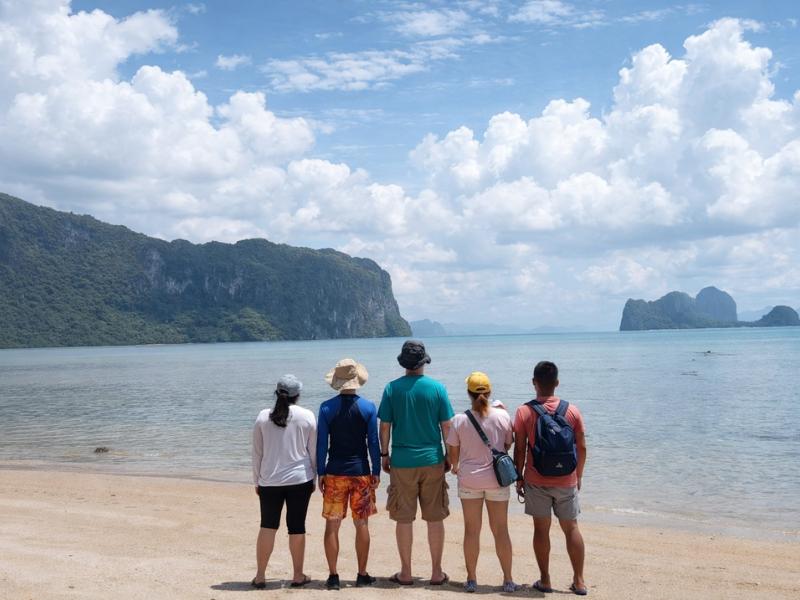
Group Tour B costs PHP 1,200 to 1,300 per person and can be booked through tour operators in El Nido town, at your accommodation, or online. The ETDF eco fee (PHP 400) is paid separately and valid for 10 days across all tours. There are no lagoon fees on Tour B, but Cudugnon Cave now charges PHP 150 per person on site. Private boat hire runs PHP 7,000 to 9,000 for the whole boat. Tour B is typically easier to book with shorter notice than Tour A, even in peak season.
Because Tour B (book group tour Explore El Nido Tour B: Caves and Snake Island or private tour Explore El Nido Private Tour B with Lunch) draws fewer travelers, last-minute booking is more realistic than with Tour A. In peak season, two to three days ahead is usually sufficient. In shoulder or low season, booking the morning of is often possible. That said, booking a day ahead is always sensible if you have a specific departure date in mind and want a morning slot.
Want to know the minimum time needed to do El Nido properly without feeling like you barely scratched the surface? Here’s our how many days do you need in El Nido tours guide so you don’t cut it too short.
| Group tour (per person) | PHP 1,200 to 1,300 | Varies slightly by operator |
| ETDF (eco fee) | PHP 400 | One-time, valid 10 days, all tours |
| Cudugnon Cave entrance | PHP 150 | Paid on site; recently privatized |
| Snorkel mask rental | PHP 100 to 150 | Optional; bring your own for better fit |
| Water shoes rental | PHP 50 to 100 | Recommended for Cudugnon Cave entry |
| Private boat (total) | PHP 7,000 to 9,000 | For the whole boat; per-person cost drops with group size |
All prices verified June 2026 against El Nido Municipal Tourism Office records and operator price lists.
One practical advantage of Tour B for private tour travelers: since the route doesn’t require timed entry to lagoons with capacity limits, a private Tour B has more scheduling flexibility than a private Tour A. The guide can sequence the stops more freely based on conditions rather than racing to hit the lagoon before the entry window fills.
Some operators offer a combined B and D tour that hits Tour B‘s caves and sandbar alongside Tour D‘s quieter lagoons. This is physically demanding as a single day but covers more of the archipelago’s less-visited areas than any standard tour. Worth asking about if you have limited days and want to push beyond the flagship routes. If you’d rather have us sort the itinerary based on your schedule, we’ve been building these combinations since 2014.
The difference between a private and group El Nido tour goes well beyond just the number of people on the boat - our private El Nido tours guide breaks down the flexibility, access, and overall experience difference that justifies the cost for the right traveller.
What Should You Know Before Doing Tour B?
The most important things to know before Tour B: check the tide for Snake Island before your departure day (your guide will know, but it’s worth asking), bring water shoes for Cudugnon Cave’s entrance crawl, and go in expecting something different from Tour A. Tour B is not Tour A with caves added. It is its own character of day, quieter and more layered, and it rewards travelers who arrive ready to engage with it on those terms.
Here is what matters on the day, from the perspective of guides who have run this route for years:
Tide timing for Snake Island. The sandbar is the visual centrepiece of Tour B, and its impact depends entirely on the tide. At low tide, the full S-shape is walkable and the scene is remarkable. At high tide, you’re walking through knee-deep water and the sandbar looks like an ordinary stretch of shallow bay. Ask your guide at booking what the tide looks like on your tour day and whether the sequence is being built around low tide at Snake Island. A good operator checks this automatically. It is worth confirming.
Cudugnon Cave entry. The entrance is a low, narrow gap in the rock face that requires crouching, often with one knee in shallow water. This is not a difficult maneuver for most people, but it is surprising for those who don’t expect it. Water shoes are important here: the rock at the entrance is sharp and wet. Inside the cave, the floor is uneven. Take the guide’s lead on footing. Bring a small waterproof flashlight if you have one; the inner chambers are dim even with natural light filtering in.
Bring more cash than you think you need. Tour B has no lagoon fees, but the Cudugnon Cave entrance fee (PHP 150) is a recent addition that catches travelers unprepared. Add snorkel mask rental, cold drinks at whatever beach stop you prefer, and a coconut at the end of the day, and PHP 800 to 1,000 in small bills is a sensible buffer.
Snorkel at Entalula properly. The snorkeling directly in front of the main beach is decent. The snorkeling off the right-hand point of the beach, past where most groups set up, is noticeably better. If you want to snorkel beyond the main beach, ask your guide which area is suitable for the day’s conditions and your swimming ability. That’s where the reef health is strongest and where the turtle sightings cluster.
First time visiting Palawan and not sure how to fit El Nido into a broader Philippines itinerary? Here’s our how to visit El Nido tours guide so you don’t underestimate how much the area has to offer.
Tour B Insights From Our 8,200+ Guided Travelers
| Travelers who did Tour B | 41% of all El Nido Tours clients |
| Most common day Tour B was done | Day 3 or 4 of the stay (67%) |
| Travelers who rated Tour B higher than expected | 72% |
| Most cited highlight of Tour B | Snake Island sandbar (54%), Cudugnon Cave history (31%) |
| Most common preparation mistake | No water shoes for Cudugnon (48%), insufficient cash for cave fee (27%) |
| Travelers who skipped Tour B and wished they hadn’t | 38% of those who didn’t do it |
| Average crowd comparison to Tour A (traveler self-reported) | Tour B felt “significantly less crowded” for 81% of those who did both |
Frequently Asked Questions
Is Tour B worth doing in El Nido?
Yes, particularly for travelers with three or more days in El Nido. Tour B is the most underrated of the four standard routes. Snake Island’s tidal sandbar is genuinely unusual, Cudugnon Cave carries historical weight that no other stop on any tour matches, and the overall crowd level is significantly lower than Tours A and C. Most travelers who do it rate it higher than they expected.
What is special about Snake Island in El Nido?
Snake Island, formally Vigan Island, is known for its naturally occurring S-shaped sandbar that emerges at low tide, creating a pale walkable strip of sand between two bodies of water. The shape is visible from the island’s viewpoint and creates aerial photographs that look almost impossible. At low tide, you can walk the full length of the sandbar with open sea on both sides. At high tide, it sits under two feet of water.
What is Cudugnon Cave and why does it matter?
Cudugnon Cave is a Neolithic burial site on Lagen Island where archaeological excavations found pottery, jewelry, and human remains dating to the Sung Dynasty (960 to 1279 AD). Researchers believe the cave was used by ancient settlers from Borneo who traveled to Palawan via a now-submerged land bridge. The cave also served as a hiding place for locals during World War II. It is one of the most historically significant sites accessible on any standard El Nido island hopping tour.
Does Tour B have lagoon entry fees?
No. Tour B has no lagoon stops and therefore no lagoon entry fees. The only site-specific fee is the Cudugnon Cave entrance (PHP 150 per person, paid on site). This makes Tour B’s total out-of-pocket cost lower than Tour A, which carries a PHP 200 lagoon fee plus kayak rental on top of the tour price.
When should you do Tour B, before or after Tour A?
After Tour A, ideally on day 3 or 4 of your stay. Tour A covers El Nido’s most iconic sites and works best as your opening day on the water. Tour B has its own character and rewards visitors who arrive with a sense of what the archipelago is like. Doing Tour B first and Tour A second rarely works as well because Tour B’s quieter, more layered experience calibrates expectations that Tour A’s crowds can then undermine.
Is Tour B good for families with children?
Tour B is well-suited to families. The crowd levels are low, the beaches are calm, and the caves add an element of adventure that older children tend to enjoy. The Cudugnon Cave entry requires crawling through a low opening, which is fine for children above about eight years old. Snake Island’s shallow sandbar is excellent for young children. The snorkeling at Entalula Beach is accessible and the reef is close enough to shore that less confident swimmers can participate.
Ready to book Tour B?Check group Tour B or a private Tour B if you want the Snake Island stop built around the tide. Group and private listings are on the tour pages, including pairing Tour B with Tour D for travelers who want more of the archipelago's quieter side. Check Tour B dates. Written by Ethan Reyes
Philippine tour guide since 2014 · Founder, El Nido Tours
Ethan has guided over 8,200 travelers through El Nido, the Bacuit Archipelago, and Palawan since founding the agency.