El Nido Itinerary: The Perfect 3 To 4 Day Plan (2026)
The actual day-by-day plan for 3 to 4 days in El Nido, in the right order, with what to book before you arrive.
Use your first full days for the routes you care about most, and protect separate arrival, departure and rest time. Compare Your El Nido Options Below.
Three days on the water, one on land, and a slow morning to fly home: that is the El Nido trip most people wish they had planned before they arrived. The mistake is showing up with nothing booked, then losing a day to weather or full boats and scrambling. A little sequencing fixes all of it.
- Tour A prioritises Big Lagoon; Tour C changes the scenery to reefs and hidden beaches.
- A land day fits between full boat days.
This is the actual day-by-day plan, not a debate about trip length. If you are still deciding how long to stay, that question is answered separately in our guide on how many days you actually need. What follows assumes you have three to four days and want to spend them well, in the right order, with the right things booked ahead.
What Is The Perfect 3 To 4 Day El Nido Itinerary?
The classic plan is Tour A on day one for the lagoons, Tour C on day two for snorkelling, a land day at Nacpan or a third tour on day three, and a slow final morning. It alternates water and land, and front-loads the two must-do routes in case weather forces a change of plan.
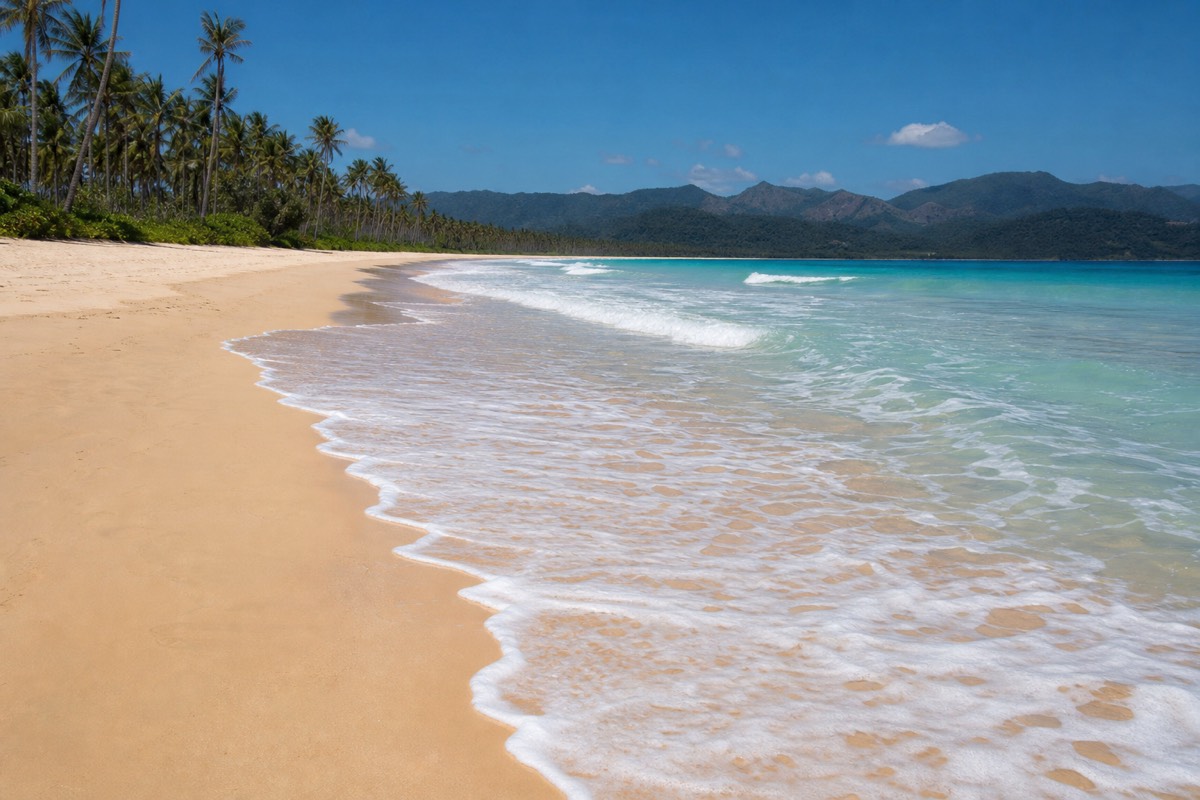
The logic is simple. Do the two headline tours early while your energy and the weather window are on your side, keep a flexible third day that can flex between another boat tour or a beach day, and leave the last day loose for a massage, a cafe breakfast and the transfer out. Here is the shape.
| Day | Focus | What you do | Pace |
|---|---|---|---|
| Day 1 | The icons | Tour A: Big Lagoon, Secret Lagoon, beaches | Full day on the water |
| Day 2 | Snorkelling | Tour C: Hidden Beach, Secret Beach, Helicopter Island | Full day on the water |
| Day 3 | Land or third tour | Nacpan beach day, or Tour B, or Tour D | Relaxed or full day |
| Day 4 | Slow finish | Cafe, town, massage, transfer out | Easy |
This plan scales with your time, which is the main thing to get right before you book anything.
| Trip length | What fits | What to cut or add |
|---|---|---|
| 3 days | Tour A, Tour C, one land or beach day | Drop the slow finish; keep three active days |
| 4 days | The full plan above | The comfortable sweet spot for most people |
| 5 days | Add a dive day or the Underground River | Room for a fourth tour or a real rest day |
The core stays the same whatever length you have: the two best tours first, land days woven in, and the long day trips only if you have the spare time.
Day 1: Why Start With Tour A?
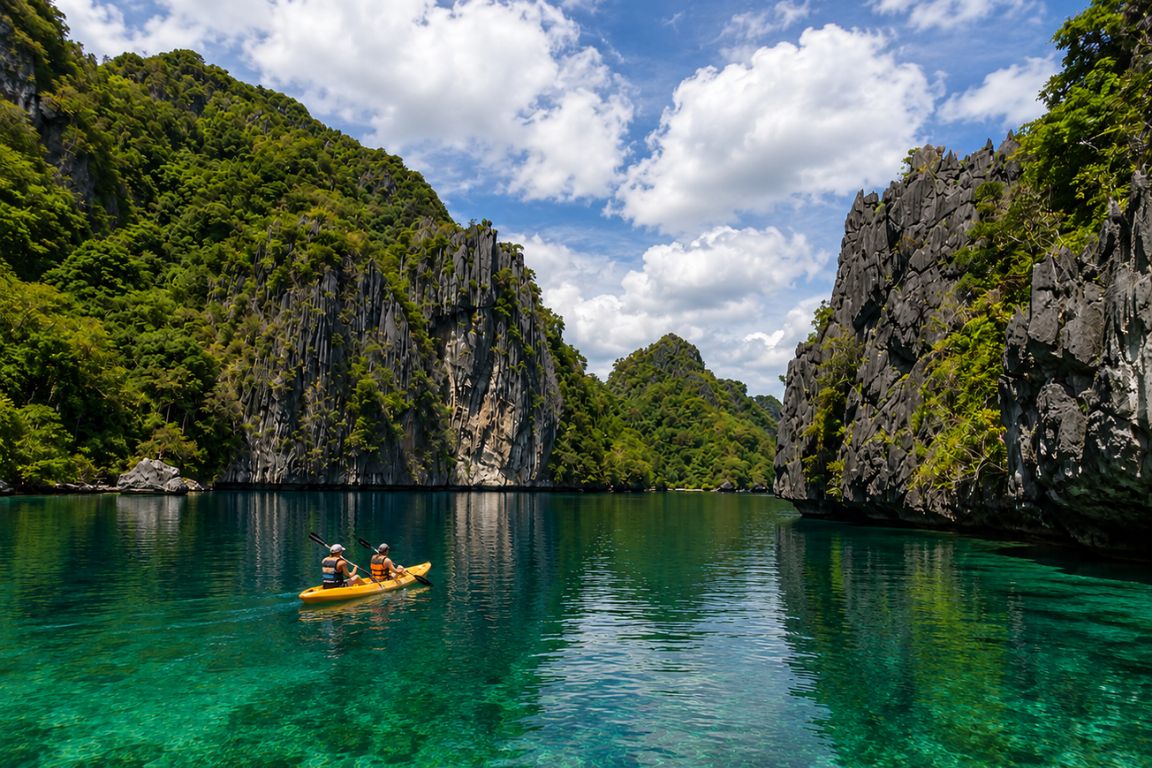
Start with Tour A because it visits the Big Lagoon and Secret Lagoon, the images that put El Nido on your list, and it is the busiest route, so putting it early leaves later full days available if weather forces a change. It also eases you into the boat rhythm.
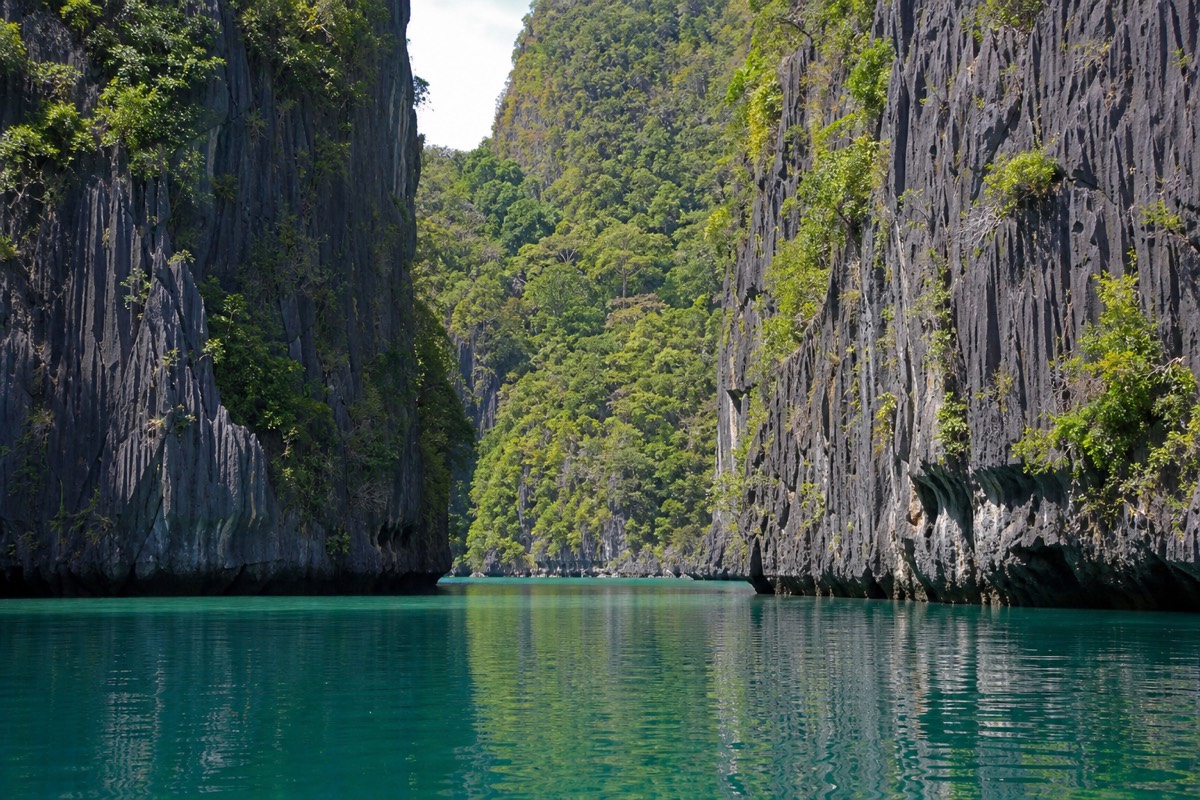
Tour A is the signature circuit and the usual first day for good reason. It packs the famous lagoons with beach and snorkel stops, and it is the route people most regret missing. Alongside the three lagoons it takes in Shimizu Island for snorkelling and Seven Commandos Beach for the lunch stop, so the day balances the headline sights with time in the water and on the sand. Getting it done on day one is insurance: if a squall cancels a boat day later in the week, you will not have skipped the icon. It is also a gentle introduction to the daily pattern of loading a bangka, moving between stops and eating a buffet lunch on the boat, so the days that follow feel familiar.
For what each stop involves and how to handle the lagoon entrances and fees, our page on the Big Lagoon and Small Lagoon goes stop by stop. To book the day itself, Tour A, the classic first day, runs shared with buffet lunch and gear included, or you can go private for your own boat group. Booking the water days through El Nido Tours before you fly means your seats are held and paid by card, so the only cash you need on the day is for the local fees.
Day 2: Why Tour C For Your Second Day?
Tour C is the pick for day two because it has the most dramatic scenery and the best snorkelling of the four routes, taking in Hidden Beach, Secret Beach, Helicopter Island and Matinloc Shrine. After the lagoon-focused first day, it shifts you to open reefs and swim-through beaches, so the two days feel distinct rather than repetitive.
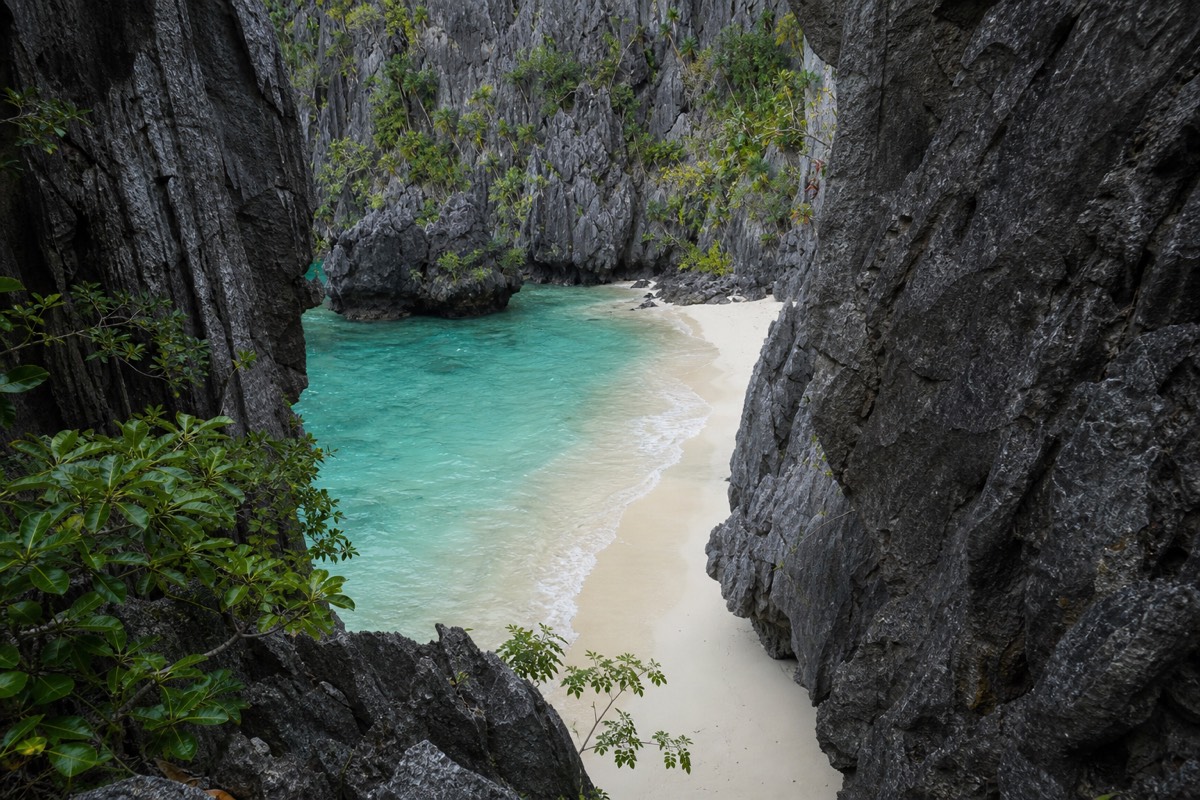
Where Tour A is about the lagoons, Tour C is about the water itself: better reefs, more colour, and the theatrical Secret Beach you reach by swimming through a gap in the rock into a hidden cove. Running it second means your two big water days do not blur together, and you get the snorkelling highlight while you are still fresh and before any weather risk later in the week.
The route strings together Hidden Beach, Secret Beach, Helicopter Island, Matinloc Shrine and Tapiutan, so it mixes swim-through coves, a hilltop shrine and some of the archipelago's best reef in one day. One thing to note is that Secret Beach is tide-dependent, reached by swimming through a gap in the rock, so the guide sequences it to the conditions on the day. Book the day through Tour C for the best snorkelling, and bring your own mask if you have one, since a good fit makes the reef stops far better. Tour C ranges a little further out than Tour A, which is part of why the scenery feels bigger.
Day 3: Tour B, Tour D, Or A Land Day?
Day three is the flexible one. Take a land day at Nacpan Beach to rest your skin, or add a third boat tour: Tour B for the Snake Island sandbar and caves, or Tour D for the quiet Cadlao lagoons closest to town. Pick the land day if two boat days were enough, a third tour if not.

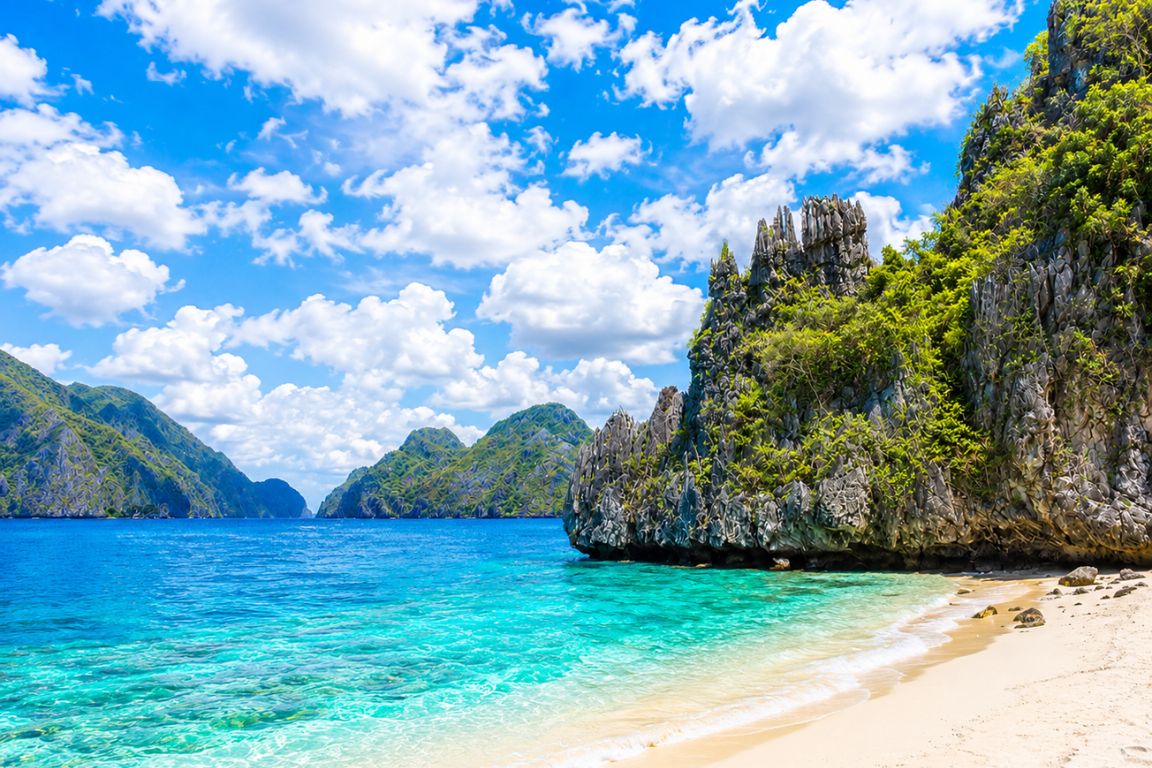
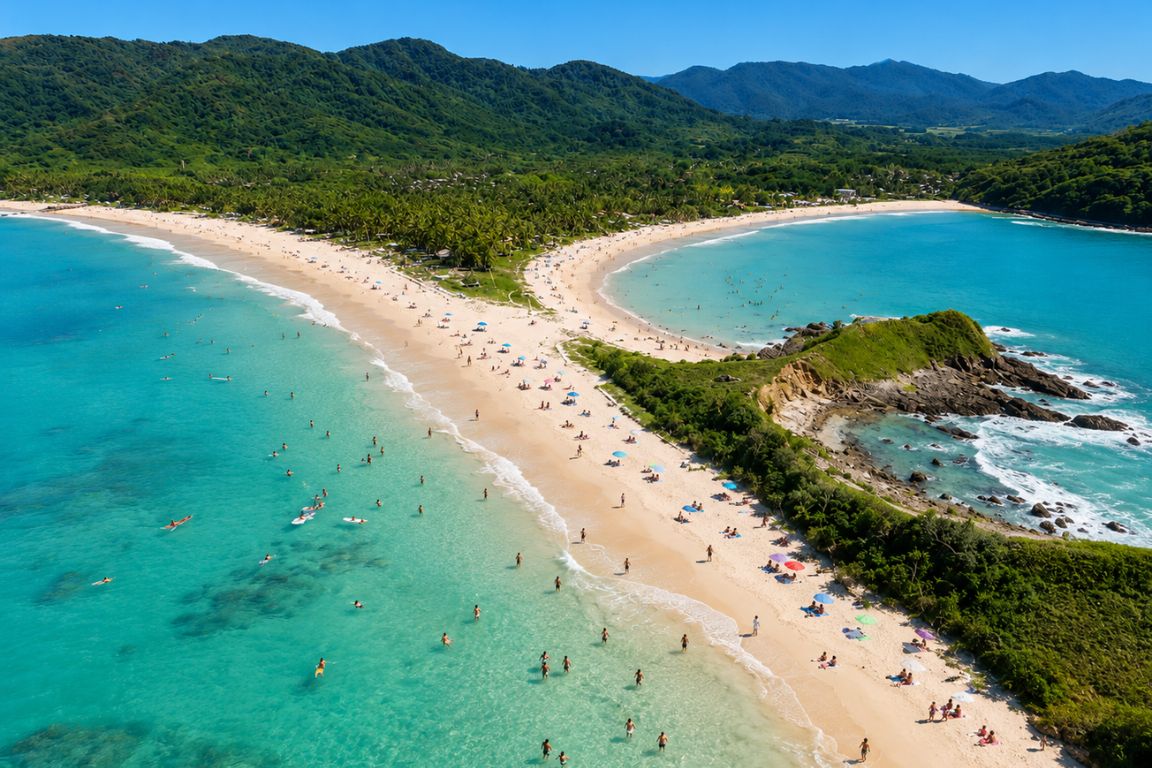
By day three you know whether you want more boats or a break, and both are right answers. A land day up at Nacpan Beach gives your sunburn a rest and shows you a side of El Nido the tours skip, all reached over land rather than by bangka, with time to actually slow down on a wide quiet beach.
If you would rather stay on the water, the third-tour choice comes down to mood. Tour B, with its sandbar and caves, adds the Snake Island tidal sandbar you can walk at the right tide, the Neolithic cave archaeology at Cudugnon, and stops at Entalula and Pinagbuyutan, so it leans more toward history and variety than lagoons. Tour D runs the fewest boats of the four and stays nearest town, covering Cadlao Lagoon, Small Lagoon, Paradise Beach and Pasandigan for the calmest day of the set. Our side-by-side comparison of the four tours lays out exactly how they differ if you are torn between them.
A useful way to decide: if your group liked the caves-and-beaches change of scene, take Tour B; if two big days on the water left you wanting somewhere quiet and close, take Tour D and be back in town by early afternoon. There is no wrong pick, and either makes a fuller trip than a second lagoon day would.
| Day 3 option | Highlight | Best if |
|---|---|---|
| Nacpan land day | Long quiet beach, coast drive | Two boat days were enough |
| Tour B | Snake Island sandbar, caves | You want variety on the water |
| Tour D | Cadlao lagoons, fewest boats | You want a calmer boat day |
Day 4: How Should You Spend A Slow Final Day?
Keep the last day gentle. Sleep in, have a long cafe breakfast, get a cheap massage, wander the town and beachfront, and watch a final sunset from Corong Corong before your transfer. Avoid booking a boat tour on a departure day, because a weather delay or a late return can put your flight or van at risk.
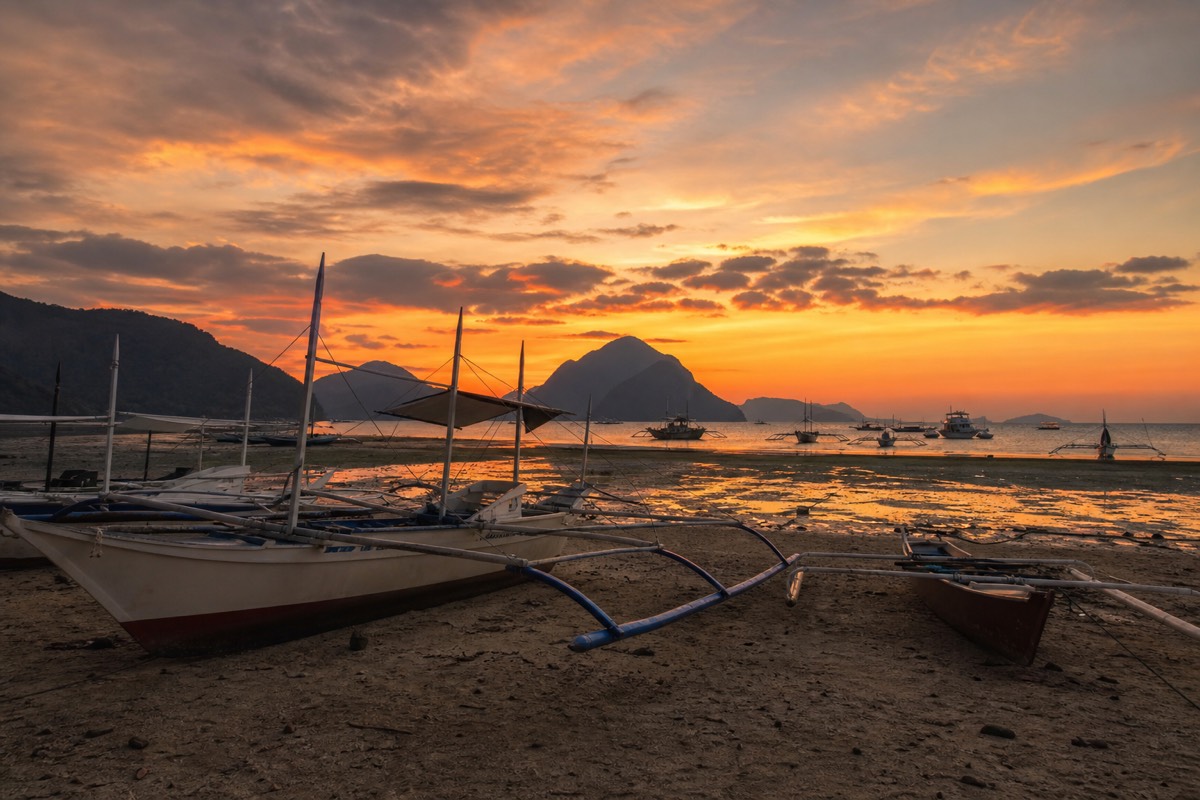
The final day is for winding down, not squeezing in one more big trip. A morning swim, a leisurely breakfast, some last souvenir shopping and an hour with a masseuse is the right speed after three active days. If your flight or transfer is later in the afternoon, there is time for a short visit to a beach close to town, but keep it flexible and close.
The reason not to book a full boat tour on your way out is timing risk: tours can run late or be delayed by the Coast Guard, and you do not want that gamble against a flight. This is also the day to sort anything you have been putting off, from packing to settling bills while the town's card machines are working. A well-placed base makes this easy, and where you choose to stay shapes how relaxed the whole trip feels, from how far you carry a bag to the pier for a morning pickup to how close dinner is on the last evening.
What Does A Day On An Island-Hopping Tour Actually Involve?
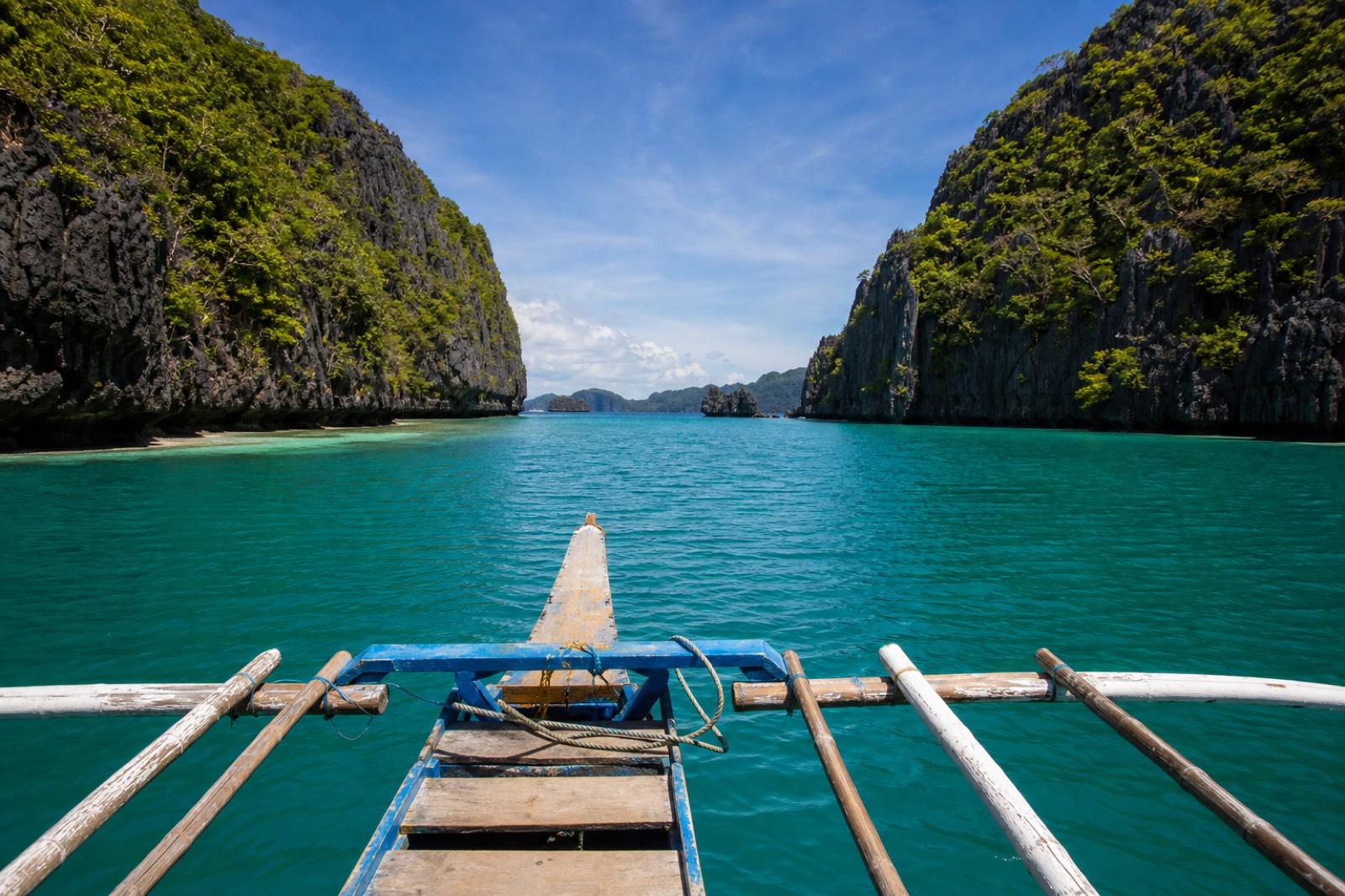
Each classic tour is a full-day trip on a traditional wooden bangka outrigger, with bench seating under a shaded canopy, carrying up to around 25 people on a shared tour or just your group on a private one. Buffet or picnic lunch, a mask and snorkel, and life jackets are all included in the fare.
The pattern is the same across all four routes and worth knowing before you plan the week. You gather in the morning, the boat works through four or five stops with time to swim, snorkel and explore at each, and lunch is served on a beach or on board partway through. You are usually back at the dock in the mid to late afternoon, which is exactly why one tour per day is the standard pace and why a departure-day tour is a bad idea.
Shared tours are the sociable, lower-cost option and perfectly good for most people. A private boat costs more but runs the same route on your schedule, which matters most on the busy Tour A lagoons where your group can discuss the day’s timing with the crew. Either way the gear and lunch are handled, so the only extras to carry are pesos for the eco-tourism and lagoon fees and your own sunscreen. Knowing this rhythm ahead of time makes the whole trip easier to plan, because you can picture roughly when you leave, when you eat and when you are back in town each day.
What Should You Book Ahead Of Time?
Book your island-hopping tours and accommodation before you arrive, so you can compare actual dates and organise your payment and cash needs. Booking tours online lets you pay by card and locks your seats, while cash in pesos covers the eco-tourism and lagoon fees. Flights to El Nido are limited, so book those early too.
The two things that ruin unplanned trips are full boats and empty ATMs. Check your actual tour date and do not rely on a last-minute cash withdrawal. Locking tours in online solves both: your seat is held and you have paid by card, so you only need cash for the fees.
| Book ahead | When | Why |
|---|---|---|
| Island-hopping tours | Before arrival, more in peak season | Check your date and payment terms online |
| Accommodation | Weeks ahead in Dec to May | Compare rooms for your actual dates |
| Flights to El Nido | As early as possible | Match your actual flight with transfer times |
| PHP cash | Draw before you arrive | Town ATMs are unreliable; fees are cash only |
| Underground River / dive day | Before arrival if on your list | Long days that need a dedicated slot |
Carrying enough pesos from Puerto Princesa or Manila covers the environmental fee of around PHP 400, the Big Lagoon users' fee of around PHP 200, and kayak rental of roughly PHP 300 to 500. Tour prices themselves move with the season, so check the live listing rather than relying on a fixed figure, and book the routes you care most about first.
How Do You Fit This Around Your Arrival And Departure?
El Nido is reached by AirSwift flights into the small El Nido airport at Lio, or by a four to five hour van transfer from Puerto Princesa airport to the south. Arrival day is usually a write-off for tours, so plan to land the day before your first tour and keep departure day free.
How you get in shapes the first and last days. Flying into the local airport is quickest and drops you minutes from town, while the Puerto Princesa route is cheaper but adds a long van ride, so neither pairs well with a same-day boat tour. Details on both routes live in our guide on how to visit, but the planning rule is the same: treat travel days as travel days and do not schedule a tour against them.
Practically, that means landing the afternoon before Tour A, using that first evening to draw or confirm cash and grab dinner in town, and keeping the morning you leave clear. If you are flying, current AirSwift schedules tell you whether a morning departure leaves any room for a short beach visit first, or whether you should just have a slow breakfast and head to the airport.
How Can You Adjust The Plan For Less Time Or Rougher Weather?
With only two full days, do Tour A and Tour C and skip the rest. In the June to October monsoon, stay flexible, run the must-do tours on the calmest forecast days, and keep a land-day backup ready, since the Coast Guard can delay or cancel departures at short notice. Never leave a must-do tour to your last day.
Short trips are about priorities: Tour A and Tour C are the two to protect, and everything else is a bonus. If you have to cut, cut the third tour or the slow day, not the lagoons or the snorkelling. Two good boat days plus an evening or two in town is still a strong trip.
Weather is the bigger variable. In the wet season, roughly June to October, the southwest monsoon brings more rain and rougher seas, and boats can be held ashore on the Coast Guard's call at short notice, so building in a spare day and a land-day plan B saves the trip when a tour gets pushed. Watching the forecast and doing your priority tour on the calmest-looking morning is the smart play, and a land day fills a blown-out morning without wasting it. Timing the trip well helps most of all; our guide to the best time of year to come covers the seasonal trade-offs so you can pick dates that stack the odds in your favour.
Even in the dry season a single windy day can turn the water choppy, so the same principle applies year round: never pin your one shot at Tour A or Tour C to a day you cannot move. Keeping the two headline tours near the front of the trip, with the flexible land day as a buffer, is what lets a rearranged schedule still deliver the full trip rather than a compromised version of it.
How Does A 5 To 7 Day El Nido Itinerary Look?
With five to seven days you keep the same core, two headline tours and a land day, then add what a short trip skips: a third or fourth boat route, a dive day, the long Underground River trip, or the multi-day expedition boat across to Coron. The extra days also buy real rest between big days on the water.
The mistake on a longer stay is stacking more of the same. Five boat days in a row will flatten anyone. A better week alternates hard and easy: a couple of island tours, a land or dive day, another tour, then a genuine rest day before the Underground River, which is a long haul on the road and deserves fresh legs. If you have a full week and want the wildest version, the Coron-To-El-Nido Expedition can replace three of these days entirely, sailing you up the island chain instead of returning to town each night. That also feeds naturally into the question of whether to base the back half of the trip in Coron, which our El Nido versus Coron comparison weighs up.
Here is one way to spread six days without burning out. Slot the Underground River day trip onto a day you are not also chasing a boat, because it eats the whole day and then some.
| Day | Focus | Pace |
|---|---|---|
| Day 1 | Tour A, the lagoons | Full day on the water |
| Day 2 | Tour C, snorkelling | Full day on the water |
| Day 3 | Land day: Nacpan, or Taraw at dawn | Relaxed |
| Day 4 | Tour B or Tour D, or a dive day | Full day |
| Day 5 | Underground River day trip | Long day on the road |
| Day 6 | Slow finish, town, sunset, transfer | Easy |
Seven days simply adds a second real rest day, which in the wet season doubles as weather insurance. The longer you stay, the less it hurts to lose one morning to a squall.
What Should You Pack For A Day Of Island Hopping?
Pack light but deliberately for a boat day: reef-safe sunscreen, a rash guard, a dry bag, water shoes for the sharp rock at the lagoons, a quick-dry towel, and enough pesos in small notes for the lagoon and eco fees. The featured tours list lunch and life vests, while other gear can be extra, so what you carry is sun protection, cash and a way to keep valuables dry.
Confirm whether your booking supplies a mask and snorkel or charges a rental fee; life vests are listed, so do not lug your own unless you want a mask you know fits. What the boat does not supply is shade for your skin over a full exposed day, which is why a rash guard beats reloading sunscreen every hour, and why a hat and sunglasses on a cord earn their space. A small dry bag keeps a phone and cash safe when you wade ashore or kayak a lagoon, and cheap water shoes save your feet on the coral-sharp limestone at the lagoon entrances. Keep the fee money separate and dry, because the eco-tourism and lagoon charges are cash only and collected on the spot.
Everything else is optional weight. Leave the big camera if a phone on a tether will do, skip anything you would hate to drop overboard, and remember the buffet lunch is already handled, so you only need snacks if you get hungry between stops. For the full kit, including what earns its place off the boat, see our El Nido packing list.
| Item | Why it matters on a boat day |
|---|---|
| Reef-safe sunscreen and a rash guard | Full exposure for hours; protects skin and reef |
| Dry bag | Keeps phone and cash safe when you wade or kayak |
| Water shoes | Sharp limestone at the lagoon entrances |
| Small notes in pesos | Eco and lagoon fees are cash only, paid on the spot |
| Quick-dry towel and a hat | Comfort between swims; no shade on open stops |
How Much Should You Budget For This Itinerary?
A four-day version of this plan with two shared boat days runs roughly PHP 12,000 to 15,000 on the ground for a budget traveller, more with private boats or a resort room, and that sits on top of your flights. The boat days and your bed drive the total; food and tricycles barely move it.
The single biggest lever is whether you share the boat or charter it. Shared seats keep a day cheap and are perfectly good for most people, while a private boat costs several times more but splits well across a family or group and lets you discuss the pace with your own crew, within route and entry rules. After that it is your room: a dorm bed and a resort suite are worlds apart on price and barely different on how good the water days feel. Fees are small but cash only, so carry pesos for the environmental fee of around PHP 400, the Big Lagoon users' fee of around PHP 200, and kayak rental of roughly PHP 300 to 500. Tour prices move with the season, so check the live listing rather than a fixed figure, and see our full El Nido cost breakdown for where every peso goes.
Sequenced right, El Nido gives you the lagoons, the reefs, a proper beach day and a soft landing home without a single wasted morning. The one thing worth doing before anything else is locking your island-hopping days, because the boats and the beds go first in peak season, and the rest of the plan falls into place around them.